These five books are important works about Greece — fiction and nonfiction — and all of them will help any reader to understand the country in greater depth. Most importantly, they are not about ancient times, but Greece today, as it was shaped by events of the 20th century. All of them are very readable.
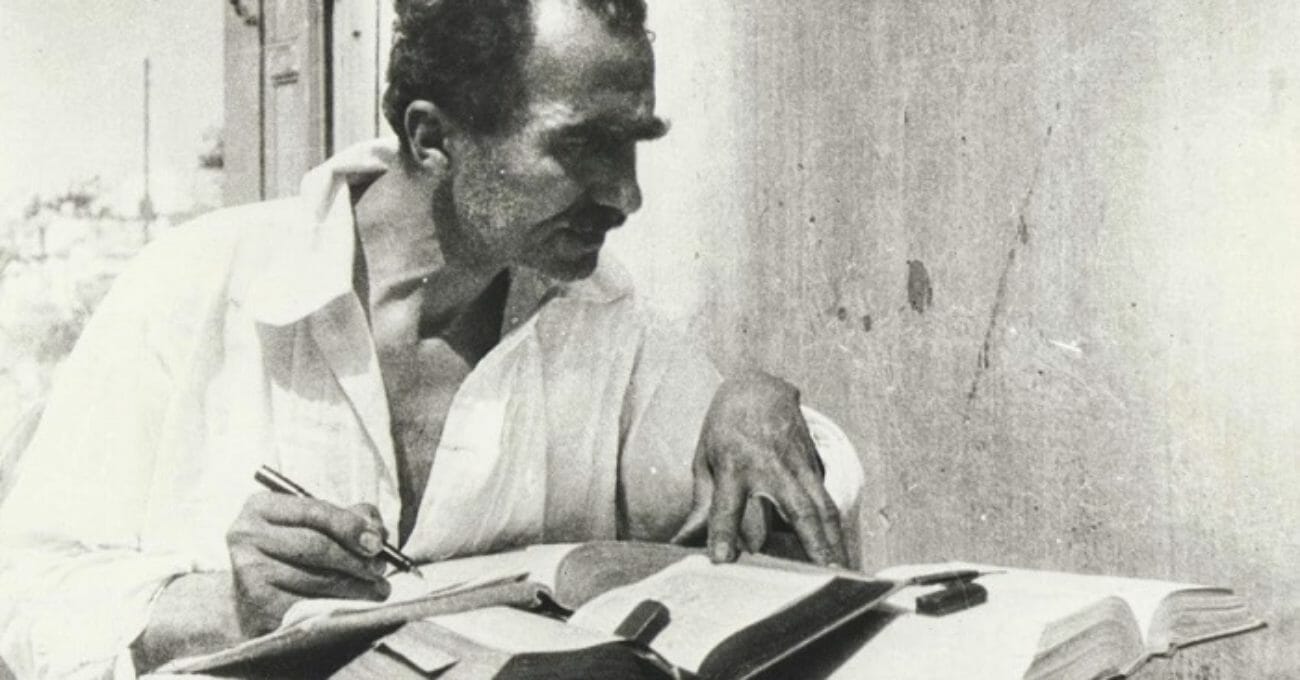
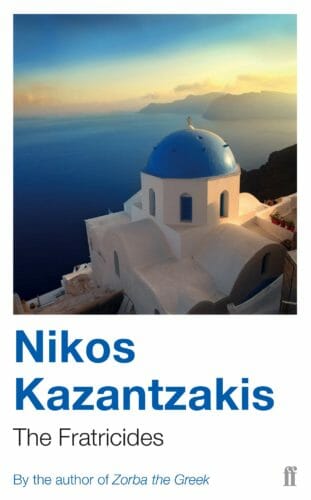
The Fratricidesby Nikos Kazantzakis (1964)
Everyone knows of Zorba the Greek (often because of the film), but this is another, equally fascinating novel by Nikos Kazantzakis. It is set during the civil war of the 1940s and shows Greece destroyed by war and occupation. Hope comes in the form of Father Yanaros, who tries to end the war in his village; the message, if there is one, is that hate and nationalism often go hand in hand. In this story faith goes some way towards repairing the damage — not just religious faith, but faith in your fellow man. The story has lots of contemporary resonance.
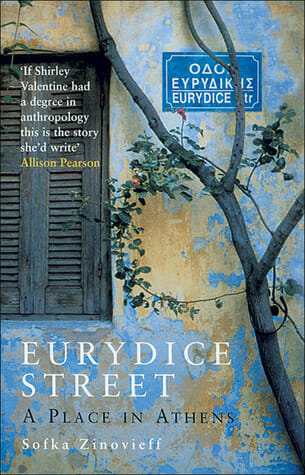
Eurydice Streetby Sofka Zinovieff (2004)
In this charming book Sofka Zinovieff describes how she moved to Athens with her Greek husband and two young children in 2001. She writes in a warm and often amusing way about a chaotic city, noticing the strange habits and traditions that locals take for granted, but outsiders are surprised and bemused by. As an anthropologist, she explores what lies beneath the surface of human behaviour and with affection and criticism paints a lively portrait of the real Athens. I learnt so much from reading this book.
Svelte and dressed in black, Victoria Hislop looks healthy and relaxed as she sits at a corner table for afternoon tea. The sun is out, there’s a pleasant hubbub in the cafe and for a moment 1 imagine we’re in Greece, such is her ability to transport us through her stories (her readership totals 10 million). She is telling me about her latest novel, Those Who Are Loved, which promises to be her most fascinating odyssey yet.
(read Sloane Square Magazine online)
We are in fact sitting beside the King’s Road, Victoria having just arrived from a Pilates class at nearby Heartcore. She is now describing a different journey, closer to home. “I’d always wanted to live on the King’s Road,” she says. “Gradually I worked my way up through South London, at a time when taxis didn’t always agree to go south of the river. The King’s Road always had this incredible buzz, this atmosphere. I can’t imagine living anywhere else in London now.”
Favourite haunts today include Colbert in Sloane Square, where she enjoys a glass of house champagne and the chopped chicken salad. “I like food that doesn’t get in the way of conversation and isn’t over-priced,” she says. “The new Granger & Co. in Pavilion Road is also very good.”
Being able to walk to places is one of the great joys of living in Chelsea, she feels. “You can walk into the West End. I walk to the London Library, which is like my office. Going about on foot lets me take things in. Have you seen the new blue plaque for P. L. Travers, creator of Mar}’ Poppins, on the corner of Smith Street?” She points across the King’s Road to it.
The last time we saw each other, we were squashed onto a table at a Christmas book event in our local Waterstones together with William Boyd, another author living near the King’s Road. “He is one of only a handful of authors whose latest book I’ll pre-order without knowing anything more about it, so good is his prose.”
Much of her time is spent at an apartment she rents in Athens. She first fell in love with Greece by visiting Athens in the Seventies. “I also have a place in Crete where I do lots of writing.” Her books have been translated into more than 35 languages and she travels to various foreign sales territories, too. “It turns out my books sell very well in Norway. Perhaps they like to travel somewhere sunny through my stories.”
But her latest book, Those Who Are Loved, visits one of the darkest chapters of modern Greek history – the Nazi occupation and the ensuing civil war. “The right-wing factions collaborated with the Nazis in order to suppress the Communists. Files were kept on Communists well into the post-war period, and the fault lines spread down the generations,” she explains.
It’s the tale of an ordinary woman leading an extraordinary life. “The central character is a female communist – with a small ‘c’ – named Themis, who is imprisoned on a succession of islands but who never gives up her fight for justice and for love. It was only after I’d picked her name that I discovered that the figure you see on top of the Old Bailey – blindfolded, holding a sword and scales – is also
Themis, so there was this wonderful sense of synchronicity.”
As for Victoria’s own taste of Greece right at home, she tells me, “I’ve started growing olives in our little back garden. Perhaps I’ll press them into oil and put it into those tiny little bottles used for snail serum. Perhaps I’ll sell them at a stall in the farmers’ market on sunny days,” she jokes with a smile. And if she did? I’ve no doubt people would buy them.
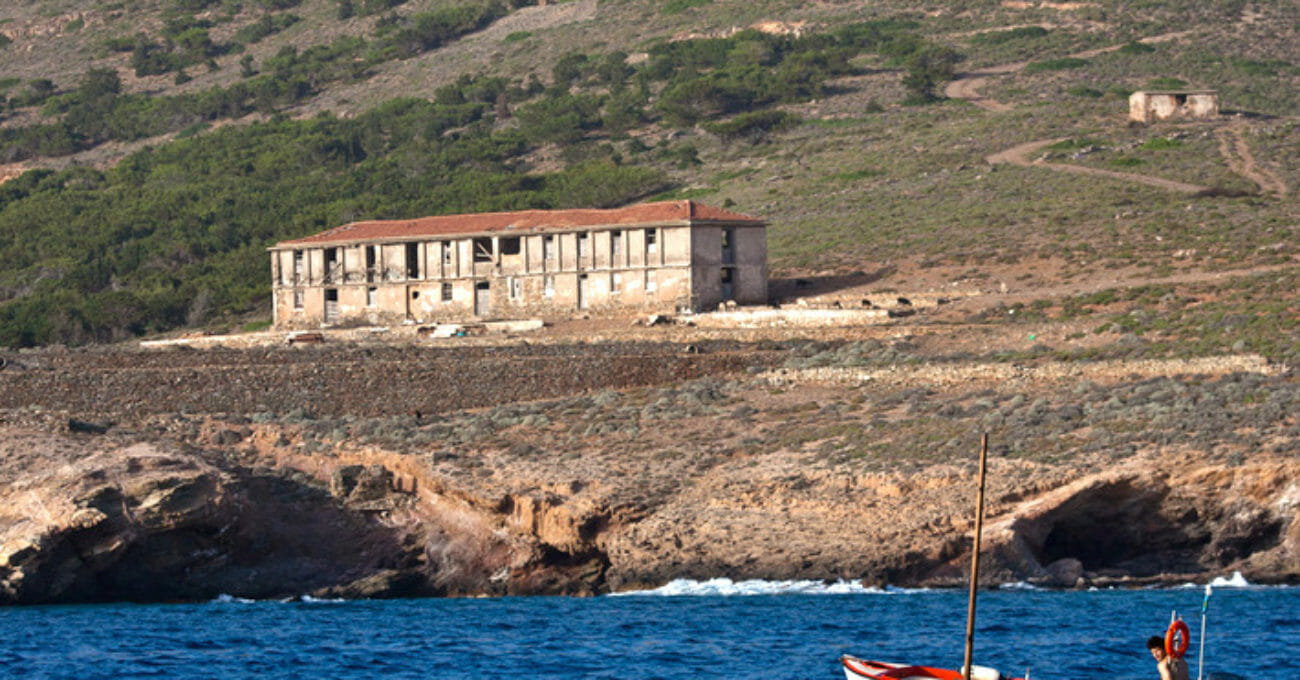
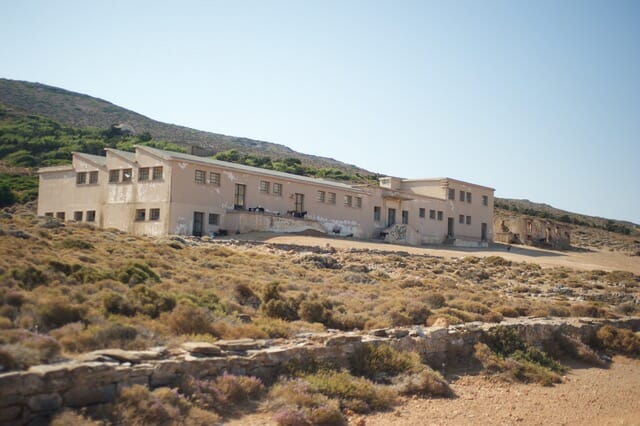
The prison island which features in Those Who are Loved has a new status as an area of archaeological interest. Victoria is very hopeful that this will enable more people to visit Makronisos for themselves
Makronissos Island, used as a military prison island in the mid-20th century
The Greek Culture Ministry’s advisory body on the protection of antiquities, the Central Archaeological Council (KAS), ruled that the small, uninhabited island of Makronissos is an area of archaeological interest.
The proposal came from the Cyclades Ephorate of Antiquities which is conducting field expeditions on the island in the past few years and the decision came on July 2.
Makronissos, along with Gyaros in the northern Cyclades, served as the notorious prison site for leftists from the time of the Greek Civil War (1946-1949) until the restoration of democracy, after the collapse of the military dictatorship in 1974.
The island is located close to the eastern coast of Attica, facing the port of Lavrio.
The Culture Ministry said that, during its historic significance, the island has been protected since 1989, when it was declared as an area of historic importance, while the buildings in the detention camps became listed.
Archaeologists also discovered antiquities. The first man-made remains in Makronisos date back to the late 4th millennium BC, while the first settlement that has been discovered on the island dates from the Early Bronze Age and is located in Provatsa, on the west side of the island.
In 2015, after extensive expeditions by the Ephorate of Underwater Antiquities, archaeologists discovered five ancient shipwrecks dating from the mid-Hellenistic to the Late Roman period.
“The declaration of the whole island as an archaeological site completes the long-term protection of Makronissos’ man-made objects by all the competent authorities of the Ministry of Culture,” it said in a press release.
Following on from the success of The Island, The Sunrise and Cartes Postales from Greece, Victoria Hislop’s latest novel, Those Who Are Loved, is set against the backdrop of the German occupation of Greece in World War II, the subsequent civil war and military dictatorship. The novel sheds light on the complexity and trauma of Greece’s past and weaves an epic tale of an ordinary woman compelled to live an extraordinary life. Interview by Alice Beazer for New Books – 100th issue
Congratulations on your amazing new novel; what was the original inspiration for Those Who Are Loved?
The inspiration really was seeing Makronisos from a distance – the island prison – and realising that Greece had its own Alcatraz or its Robben Island. I found that deeply intriguing! And ten years later, here is the novel. It was a big subject to investigate.
Those Who Are Loved begins in 2016, as Themis sits with her grandchildren. The narrative then goes back to Themis’ childhood, and tells the extraordinary tale of her life chronologically. Why did you choose to structure the novel in this way – beginning and ending in the present day (well, almost the present day)?
I have always been drawn to the notion of an older person telling a story to a younger one. Now that I am writing this, I am wondering whether this goes back to our early years when our parents, grandparents, teachers perhaps, read to us. It seems very natural to be told a story by an older person. I have done this in several of my novels. But there is an added layer perhaps – where the life of the older person has contained events or actions which they have wanted to conceal, for reasons of stigma or perhaps fear of persecution.
The powerful bond between grandparents and their grandchildren is a lovely theme in this novel; firstly, with Themis’ warm-hearted grandmother Kyria Koralis, then with Themis’ own grandchildren. Interestingly, Themis feels comfortable to discuss the details of her life with her grandchildren, but not her own children – why did you choose to write this?
I think the revelation of family secrets often takes some years. In a sense this is inevitable. Such things need the distance of time and hindsight, when there can’t be any repercussions perhaps.
Themis is the strong-willed protagonist at the heart of Those Who Are Loved – why did you choose to call her ‘Themis’? And what inspired the character of Themis? Was she based on any real woman?
My character is not based on any one individual but is inspired by all the women who got swept up in the civil war conflict in Greece – for the first time putting on trousers and picking up a gun. It was a very liberating time for women in Greece – they were very much domestic creatures until that time – and indeed they mostly returned to the same domestic position in society afterwards. The use of the name Themis was inspired by two things. Firstly, a wonderful woman I met in Athens, also called Themis, who seemed very forward-thinking, very strong, very inspiring and feminist. Secondly, Themis was the Goddess of Justice – and this is very much the motivation of ‘my’ Themis. She is motivated by a desire for justice and for equality – for the right of everyone to have food to eat and freedom to hold their own political views. This is what drives her to fight rather than a belief in communism per se. A statue of Themis stands on top of the Old Bailey, always shown blindfolded, and holding a pair of scales. She seems as relevant a symbol for our times and for 1940s Greece as she was for the Ancient Greeks.
Whilst Themis is a child, she befriends Fotini, a refugee – I loved reading about their blossoming friendship. I was struck by the clear parallels with the refugee crisis in Greece today. What did you want to show through Fotini’s story?
The influx of refugees into 21st century Greece definitely has some parallels with the wave of refugees that came in almost 100 years ago as a result of the Greek-Turkish War which resulted in the huge population exchange of 1923 (when more than a million Greek Orthodox Christians arrived in Greece from Turkey and hundreds of thousands of Moslems left for Turkey). Fotini’s family is one of those who has been displaced in this way and forms part of the huge number of largely impoverished people who struggled to survive at that time – and who allied themselves with the Left. Many of them lived as well as they could in the rapidly expanding city of Athens – and there are still areas, such as Nea Smyrni (New Smyrna) which reflect where they settled. There are some real differences, however, between refugees arriving in Greece today and those from the 1920’s. One of them is that many have ambitions to return to their home countries and do not regard Greece as a permanent home. For most 21st century refugees, Greece is a place that they are passing through in order to get to countries in northern Europe. In the 1920s the arriving refugees knew that they would never return to their original homes and also they were Greek Orthodox Christians so assimilated more speedily into Greek culture and life. I wasn’t particularly wanting to show anything through Fotini’s story, apart from the fact that social mobility is often denied to people – and poverty is often a hard situation to struggle out of.
On January 23, 2019, Victoria Hislop joined Panos Karnezis, Patricia Barbeito, David Ricks, and Roderick Beaton for a workshop to discuss issues of translating Modern Greek literature: what their work – as authors and academics – has in common, and how it differs.
The event was held in collaboration with the British School at Athens and Aiora Press with the generous support of the Creative Europe programme.
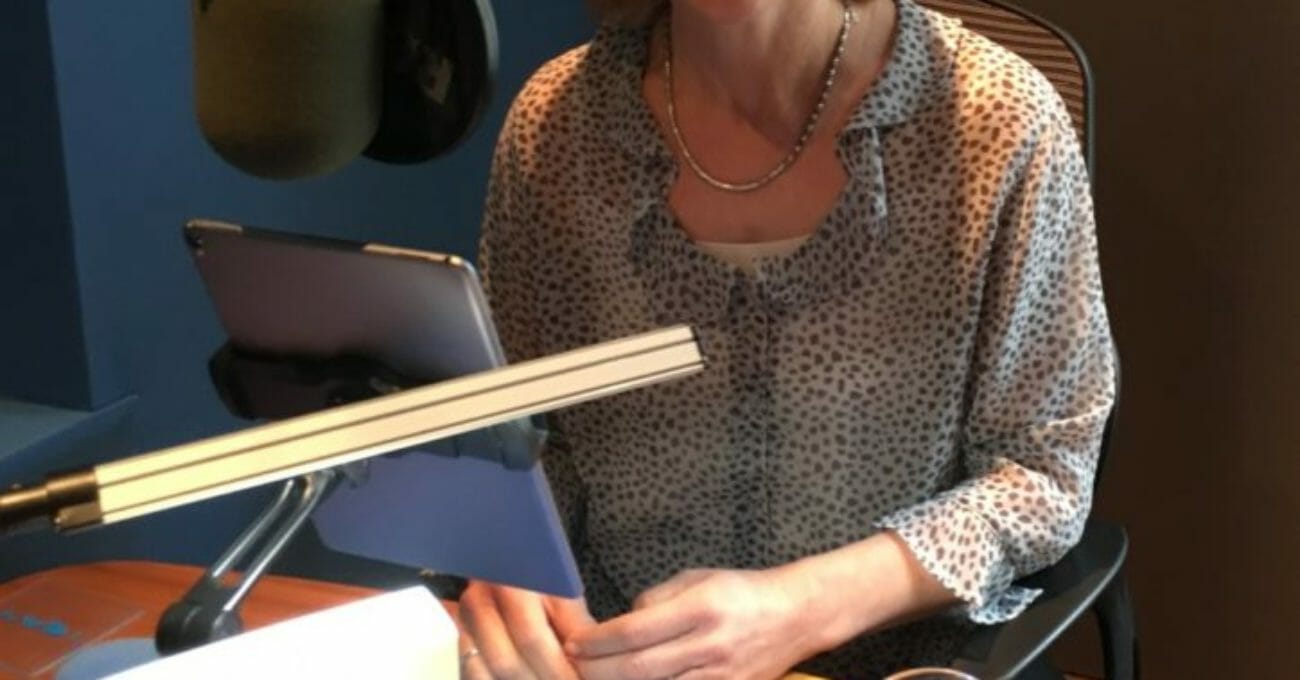
The complete audiobook is available to purchase from Audible, and from iTunes.
Synopsis
Those Who Are Loved, Victoria’s gripping new Sunday Times Number One bestseller, is set against the backdrop of the German occupation of Greece, the subsequent civil war and a military dictatorship, all of which left deep scars.
Athens 1941. After decades of political uncertainty, Greece is polarised between Right- and Left-wing views when the Germans invade.
Fifteen-year-old Themis comes from a family divided by these political differences. The Nazi occupation deepens the fault-lines between those she loves just as it reduces Greece to destitution. She watches friends die in the ensuing famine and is moved to commit acts of resistance.
In the civil war that follows the end of the occupation, Themis joins the Communist army, where she experiences the extremes of love and hatred and the paradoxes presented by a war in which Greek fights Greek.
Eventually imprisoned on the infamous islands of exile, Makronisos and then Trikeri, Themis encounters another prisoner whose life will entwine with her own in ways neither can foresee. And finds she must weigh her principles against her desire to escape and live.
As she looks back on her life, Themis realises how tightly the personal and political can become entangled. While some wounds heal, others deepen.
We use cookies on our website to give you the most relevant experience by remembering your preferences and repeat visits. By clicking “Accept All”, you consent to the use of ALL the cookies. However, you may visit "Cookie Settings" to provide a controlled consent.
This website uses cookies to improve your experience while you navigate through the website. Out of these, the cookies that are categorized as necessary are stored on your browser as they are essential for the working of basic functionalities of the website. We also use third-party cookies that help us analyze and understand how you use this website. These cookies will be stored in your browser only with your consent. You also have the option to opt-out of these cookies. But opting out of some of these cookies may affect your browsing experience.
Strictly necessary cookies are absolutely essential for the website to function properly. These cookies ensure basic functionalities and security features of the website, anonymously.
Cookie
Duration
Description
__cf_bm
30 minutes
This cookie is set by CloudFlare. The cookie is used to support Cloudflare Bot Management.
__cfduid
1 month
The cookie is used by cdn services like CloudFlare to identify individual clients behind a shared IP address and apply security settings on a per-client basis. It does not correspond to any user ID in the web application and does not store any personally identifiable information.
_icl_visitor_lang_js
1 day
This cookie is stored by WPML WordPress plugin. The purpose of the cookie is to store the redirected language.
bp-activity-oldestpage
session
This cookie is set by the provider Buddy Press activity. This cookie is used for storing the information when navigating through the pages. It helps to provide a "load more button".
cookielawinfo-checkbox-analytics
11 months
This cookie is set by GDPR Cookie Consent plugin. The cookie is used to store the user consent for the cookies in the category "Analytics".
cookielawinfo-checkbox-functional
11 months
The cookie is set by GDPR cookie consent to record the user consent for the cookies in the category "Functional".
cookielawinfo-checkbox-necessary
11 months
This cookie is set by GDPR Cookie Consent plugin. The cookies is used to store the user consent for the cookies in the category "Necessary".
cookielawinfo-checkbox-others
11 months
This cookie is set by GDPR Cookie Consent plugin. The cookie is used to store the user consent for the cookies in the category "Other.
cookielawinfo-checkbox-performance
11 months
This cookie is set by GDPR Cookie Consent plugin. The cookie is used to store the user consent for the cookies in the category "Performance".
lang
This cookie is used to store the language preferences of a user to serve up content in that stored language the next time user visit the website.
PHPSESSID
session
This cookie is native to PHP applications. The cookie is used to store and identify a users' unique session ID for the purpose of managing user session on the website. The cookie is a session cookies and is deleted when all the browser windows are closed.
viewed_cookie_policy
11 months
The cookie is set by the GDPR Cookie Consent plugin and is used to store whether or not user has consented to the use of cookies. It does not store any personal data.
wpml_browser_redirect_test
session
This cookie is set by WPML WordPress plugin and is used to test if cookies are enabled on the browser.
Analytics cookies are used to understand how visitors interact with the website. These cookies help provide information on metrics the number of visitors, bounce rate, traffic source, etc.
Cookie
Duration
Description
__qca
12 months
This is an analytics cookie set by Quantcast Measure. You can opt-out of all measurement by Quantcast via their site.
_ga
2 years
This cookie is installed by Google Analytics. The cookie is used to calculate visitor, session, campaign data and keep track of site usage for the site's analytics report. The cookies store information anonymously and assign a randomly generated number to identify unique visitors.
_gat
1 minute
This cookies is installed by Google Universal Analytics to throttle the request rate to limit the colllection of data on high traffic sites.
_gid
1 day
This cookie is installed by Google Analytics. The cookie is used to store information of how visitors use a website and helps in creating an analytics report of how the website is doing. The data collected including the number visitors, the source where they have come from, and the pages visted in an anonymous form.
Marketing and advertising cookies are used to provide visitors with relevant ads and marketing campaigns. These cookies track visitors across websites and collect information to provide customized ads.

 Eurydice Street by Sofka Zinovieff (2004)


 You can now listen to exclusive extracts from the audiobook of