On BBC Radio 4’s “Open Book”, Victoria talks to Mariella Frostrup about the themes and the history behind her new novel “The Thread”, about her love of Greece, sewing costumes on the set of the TV adaptation of “The Island” and about why, despite her bestselling books, she still doesn’t call herself a novelist…
A few photos from the launch party for “The Thread” at the Hellenic Centre, London on October 25th, where much retsina, fine Greek food and fun were had by all (Photographs by Beau Merchant)
Victoria Hislop returns to Greece for her cocktail of history and romance
Interview with Boyd Tonkin, The Independent, Friday, 14 October 2011 (see original)
In 1810, that poetic vandal Byron carved his name into the columns of the temple of Poseidon on the coast at Cape Sounion near Athens. When a later Hellenophile author visited the same spot a couple of centuries later, another feature of the landscape caught her gaze. “There are these moments that happen, or places I go,” explains Victoria Hislop about the alchemy of a haunting place and a dramatic past that has turned her two historical novels into solid-gold bestsellers. At Sounion, “I was taken there to see the sunset by friends. It’s magical: no doubt about it. But what really interested me was this dark shape just off Sounion – which is Makronissos.” About this sinister “long island”, “They were very cagey”.
Hislop’s research, which feeds into the latter part of her third novel The Thread (Headline Review, £18.99), revealed that the island had for three decades after the Greek civil war of the 1940s served as a concentration camp where Communists and other radicals were jailed, tortured and “re-educated”. Her Med-set period romances may fill a million holiday suitcases. Yet she has brought something fresh, unusual and rather intrepid to an often vapid genre, with a tenacious attention to the tangled and controversial history that fuels her plots.
Civil strife in Greece ignited when, as the Resistance gained the upper hand over the occupying Germans, it grew clear that the Allies favoured the conservative forces. The left-wing fighters of the ELAS movement would not share the fruits of victory. Many readers of Captain Corelli’s Mandolin will recall Louis de Bernières’s ferociously anti-ELAS take on this bloody falling-out. Hislop approaches the history from a very different angle.
Even though “It’s definitely a civil war where both sides behaved appallingly,” she notes that “The Resistance fought the Germans all the way through the war… And then at the end of it, they’re shoved to one side, and these collaborators are handed back the country. I can see why that would have made them very angry… I think I would have been on their side.” Given the passions this internecine slaughter still arouses, it will come as no surprise that her Greek publisher now worries about local turbulence when The Thread appears there. So is the author ready for the flak? “I have to be. Yes, I think so. You can’t be afraid of these things. Otherwise you couldn’t write anything worth writing.”
[pull_quote align=”left”]”…weaving the yarns of memory into a satisfying pattern ‘like the interwoven threads of an oriental rug’.”[/pull_quote]
Chart-topping popular fiction rarely if ever sets out to navigate such stormy seas. The astonishing impact in both Britain and Greece of The Island, her debut novel in 2005, first pointed to Hislop’s flair for mixing bitter-sweet cocktails from the gentle sensations of a sun-dappled Mediterranean romance and the sour tang of a painful, and unresolved, past. That book took its army of readers to another offshore domain of secrets, the Cretan leprosy colony of Spinalonga. But, for all the hidden misery it unveiled, The Island healed more than it inflamed.
Hislop now calls it “quite a naïve book” as well as “a very, very affectionate portrait of the Greeks – certainly of Crete. It’s meant to be. I love that place. I absolutely do.” Her family – husband Ian, Private Eye editor and stalwart fall-guy of Have I Got News For You, and their two children – have a house on Crete, where she retreats to write. She has just returned from Crete, fretful about friends’ prospects amid their nation’s still-simmering financial crisis, when we meet in a club near Trafalgar Square on a day of Greek-standard sunshine.
Ian – who also studied English at Oxford, and in the same year – never reads her novels until she writes “The End”. “I’m good at taking criticism, but not from him… I try to make it the best it possibly can be before he sees it. It must be very annoying for him, because I don’t share. But he knows what country it’s set in because I keep going there, and books lie around.” With The Thread, however, he did suggest a crucial change to the ending, “and I knew he was right”.
Did Victoria Hislop ever consider publishing her fiction under another name? She explains why not. “I was working, when I got married to Ian, for a big PR company that was owned by Tim Bell”. This “megalithic organisation” of spinners won the contract to promote the NHS reforms of the late 1980s. “I was somehow part of this team that represented these ideas to the public.” Thus, in the Whitehall offices of the department of health, “I was handed the White Paper, marked ‘Top Secret'”. At the time, she still used her maiden name at work.
As she leafed through this red-hot document in the kitchen, her husband walked in. In the case of a leak, only one prime suspect would ever occur to investigators. “People in the company,” she decided then, “need to know that I’m married to the editor of Private Eye.” The next day, she quit the NHS project and, for the sake of transparency, began to use her married name professionally. Then came pressure from Bell himself. “He was always leaning on my boss to lean on me to say, ‘Can you ask Victoria to ask Ian to stop writing about me?’… I gave up PR as soon as I possibly could. But that’s the reason I use Hislop.”
After this second Hislop made big news with The Island, fans might have expected more of the same from The Return, set around Granada during the Spanish Civil War. But for all its gypsy mood-music and charming star-crossed lovers, that book – once more a number-one bestseller – fused its battle-front romance with a pretty uncompromising view of the war. She presented it not as a vague bloody backcloth but a world-shaking collision between decent, democratic values and Franco’s brutal fascism.
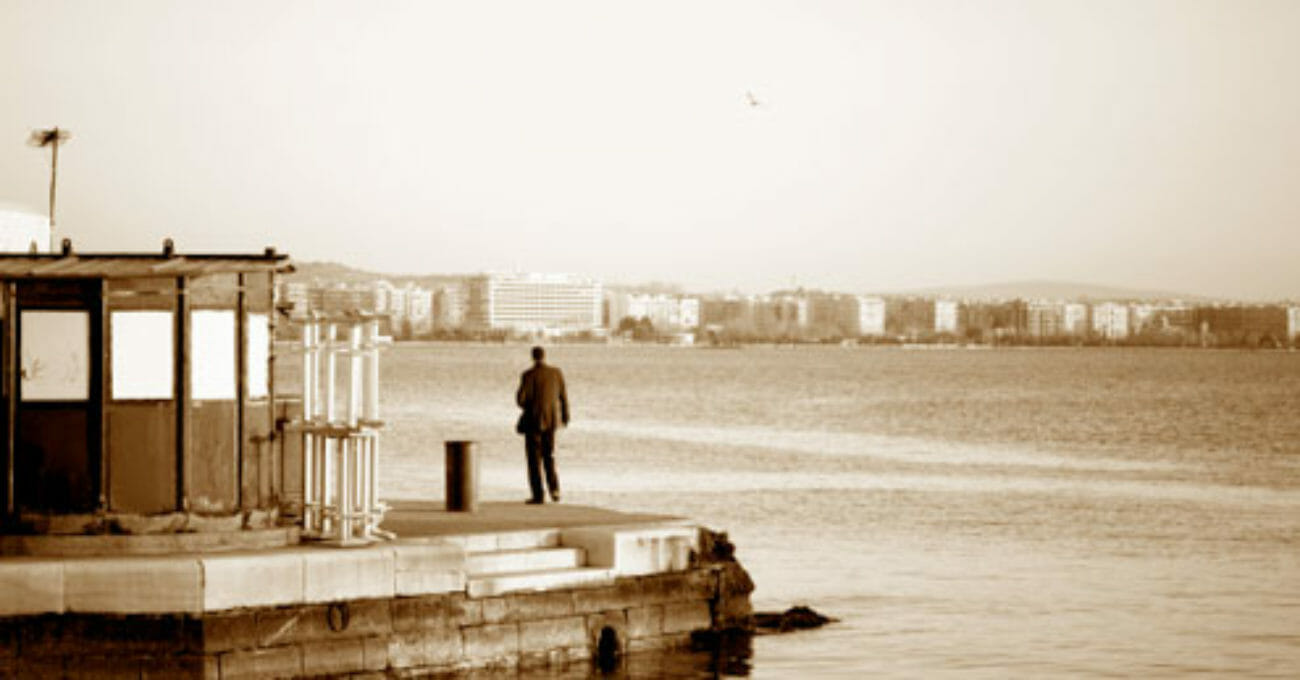
The Thread will again smuggle politics and history into the beach-bag and onto the weekend sofa. This time the focus – and a principal character – is the port city of Thessaloniki. Once the multi-cultural metropolis of Salonica, it became a Greek possession only when the moribund Ottoman empire yielded control in 1912-1913. Via a trademark Hislop time-shift, we drop back from the waterfront cafés of the modern city to 1917: year of the Great Fire that laid waste to old Salonica, and of the birth of the future couple whose path we trace through the upheavals of the Greek 20th century.
“The first time I went to Thessaloniki,” Hislop remembers, “was to give a talk at the university, which is probably the least attractive building.” Soon, though, “I came to love that city.” The Thread voices that passion, with especially warm evocations of the Muslim and Jewish communities swept away by the fatal tides of history.
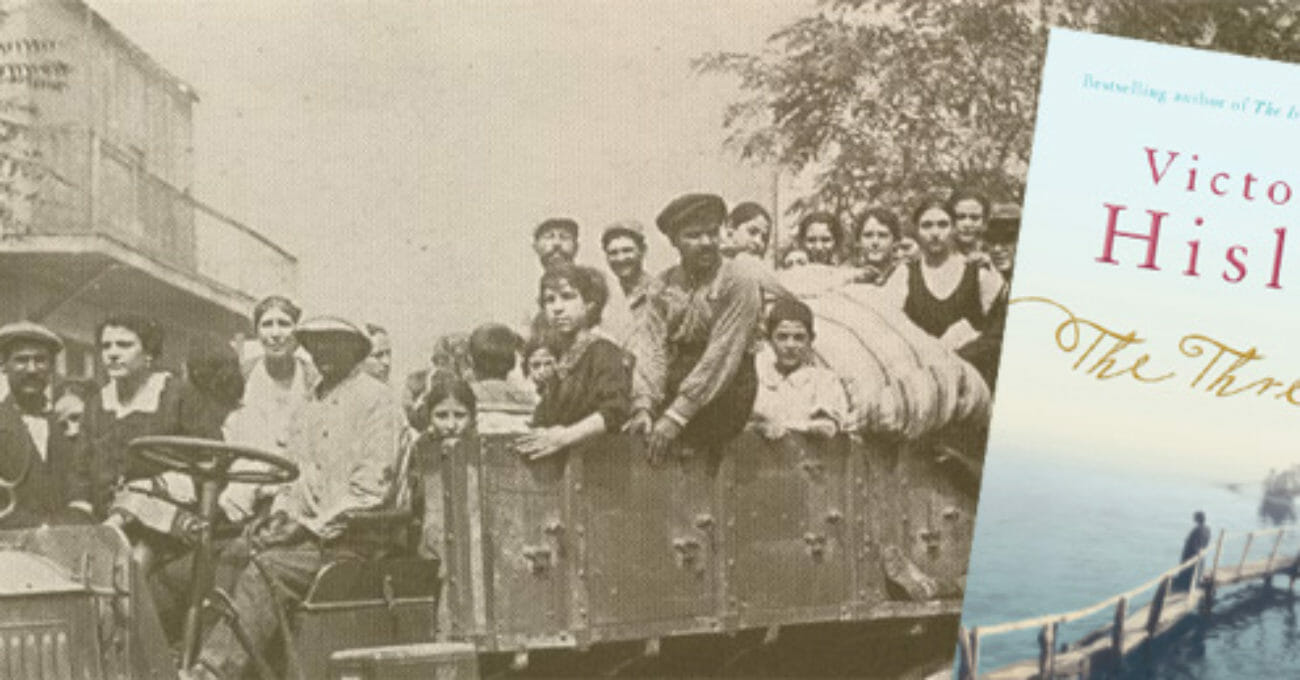
“Lots of things came together” to compose the novel’s background, she says: “but it was principally that idea of the refugee, and what it means to be Greek”. Hislop, a Greek speaker, talked to the cast and crew during the filming for the Greek series of The Island – a giant hit with the country’s viewers, like the novel itself. She discovered how many had family roots in Asia Minor: “That got me very curious.” Helped by recent histories such as Mark Mazower’s landmark study Salonica: City of Ghosts and Bruce Clark’s Twice a Stranger, she saw what the influx of so many newcomers around 1923 had meant for the nation. “It’s the equivalent of suddenly having 12 or 15 million refugees coming into Britain.”
We know from the off that our protagonists will eventually meet and marry. Dimitri is the idealistic son of a gruffly patriarchal cloth merchant; Katerina, a refugee from Asia Minor separated from her mother amid the chaos of the mass migrations, happily adopted and now a nimble-fingered seamstress for the Moreno family of Jewish tailors. Hislop guides us through decade after decade of modern Greek catastrophes. From the war with Turkey and the population exchange that ended it (Christians came to Greece; Muslims went to Turkey), through the anti-Nazi struggle and the vicious feuds of the civil war, right up to the Colonels’ dictatorship and its lingering legacy, we understand via set-piece climaxes and domestic interludes of repose just how much the nation in general, and this city in particular, have had to endure and overcome.
With screens and newspapers now swarming with images of Greek unrest, Hislop hopes that her novel may help British readers to “see a bit below the surface” of today’s turmoil. “I learnt so much myself from doing the research,” she says. “I sympathise much more with why they are how they are.” For instance, when scolding Germans speak of debts and downgrades, many Greeks will think of the nation’s plundering by its Nazi occupiers.
She has friends who are “still angry at the way the country was bankrupted during the Occupation. It was done quite methodically – there was a monthly payment – in a legalised, bureaucratic way. At the end of the war, they had destroyed the roads and bridges. They had taken all the gold, taken all the food. There was nothing in that country.” Even now, “An 80-year-old man that you see sitting in a café in Thessaloniki: he will have seen all of it. He will remember eating a small piece of tripe and watering it down over a week, and have seen people – literally – starve.”
The Thread will entertain and enlighten legions of readers who, like it or not, would never pick up a historian such as Mark Mazower. Its oddly vehement political edge and fervent multicultural sympathies cut through the helpings of schmaltz and sentiment to generate Hislop’s characteristic sour-sweet flavour. That taste can clearly tickle the palate of millions.
“I don’t think I’ve been unfair,” she says. “I hope it’s balanced. And at the end of the day, my motivation is to help the English-speaking reader understand the complexity of what’s gone on in that country. So I’ve done it with the best intentions – but, mostly, because I wanted to tell the story. One day, I’d like to write a story that comes out of my head… But meanwhile, I find these points in history – and it’s a case of joining the dots, really.” Or, to adopt the book’s signature imagery, of weaving the yarns of memory into a satisfying pattern “like the interwoven threads of an oriental rug”.
A collection of five short stories by Victoria , along with a preview of the first chapter of her upcoming novel The Thread, is published as an e-book exclusive on 15 September priced £1.99.
The stories (One Cretan Evening, The Pine Tree, By the Fire, The Warmest Christmas Ever and Aflame in Athens) are set in Greece and in England, told in Victoria’s unique voice. The ebook also includes a sneak preview of the opening chapter of ‘The Thread’, Victoria’s new novel: a powerful tale of love and loyalty, of family and loss set against the turbulent history of the city of Thessaloniki, Greece.
‘One Cretan Evening’ can be bought from all online retailers,
Victoria Hislop’s new novel, “The Thread”, is published by Headline books on October 27.
Synopsis
Thessaloniki, 1917. As Dimitri Komninos is born, a fire sweeps through the thriving multicultural city, where Christians, Jews and Moslems live side by side. It is the first of many catastrophic events that will change for ever this city, as war, fear and persecution begin to divide its people. Five years later, young Katerina escapes to Greece when her home in Asia Minor is destroyed by the Turkish army. Losing her mother in the chaos, she finds herself on a boat to an unknown destination. From that day the lives of Dimitri and Katerina become entwined, with each other and with the story of the city itself.
Thessaloniki, 2007. A young Anglo-Greek hears the life story of his grandparents for the first time and realises he has a decision to make. For many decades, they have looked after the memories and treasures of people who have been forcibly driven from their beloved city. Should he become their new custodian? Should he stay or should he go?
For more information on ‘The Thread’ and the troubled history of Thessaloniki, click here.
Reviews
“‘The Thread’ is a more ambitious novel than her previous books, more expansive in its sweep of history, more controversial in its political stance. Her many, many fans will be delighted with what is her best novel yet.” The Scotsman (full review)
“Hislop … is very good at interweaving the lives of individuals into the backcloth of great events… this is a writer of laudably high ambition and it would only take a small nudge to move her to a whole new level. Recommended” Daily Mail (full review)
[wtab name=”Trailer”][youtube]http://youtu.be/V_lGE0O09AI[/youtube][/wtab] [wtab name=”Background reading to The Thread”]
All novels which use history as a backdrop require and deserve diligent research into the world the writer hopes to portray. These are some of the books I read during my research for ‘The Thread’. In addition to these, there are others in the London Library, in the Modern Greek History section as well as in the Embroidery section:
Concise History of Greece – Richard Clogg
Hellas – Nikolaos Gatzogiannis
Remember Greece – Dilys Powell
The Colossus of Maroussi – Henry Miller
The Hill of Kronos – Peter Levi
92 Archanon Street – John Lucas
Greek Fire – Nicholas Gage
Salonica, City of Ghosts – Mazower
Chronicle of the Big Fire – Yerolympos
Farewell to Salonika – Leon Sciaky
Twice a Stranger – Bruce Clark
Heirs of the Greek Catastrophe – Renee Hirshon
Population Exchange and Rural Settlement of Refugees – Kontogiorgi
The Unmixing of Turks and Greeks – Nansen Memorial Lecture – Huntford
Crossing the Aegean – edited by Renee Hirshon
I was sent to Athens – Morgenthau
Smyrna: The Destruction of a City – Marjorie Housepian Dobkin
Paradise Lost, Smyrna 1922 – Giles Milton
The Balkan Exchange of Minorities – Dimitri Pentzopoulos
Greece and the Greek Refugees – Eddy
Beyond the Aegean – Elia Kazan
Christ Recrucified – Kazantzakis
Motherland – Dmetri Kakmi
Not Even My Name – Thea Halo
Farewell Anatolia – Dido Sotiriou
The Mermaid Madonna – Stratis Myrivilis
Secrets of the Bosphorous – Morgenthau
The Jewish Community of Salonika – Bea Lewcowicz
The Illusion of Safety – Michael Matsas
From Thessaloniki to Auschwitz and Back – Kounio Amariglio
The Holocaust in Salonica: Eyewitness Accounts – Ed. Steve Bowman
Greece – A Jewish History – Fleming
Road to Rembetika – Gail Holst
The House by the Sea – Fromer
The Origins of the Greek Civil War – Close
Greek Civil War – O’Ballance
Becoming a Subject: Political Prisoners – Polymeris Voglis
After the War was Over – Ed. Mark Mazower
Eleni – Nicholas Gage
Sephardi and Middle Eastern Jewries – ed. Goldberg
We use cookies on our website to give you the most relevant experience by remembering your preferences and repeat visits. By clicking “Accept All”, you consent to the use of ALL the cookies. However, you may visit "Cookie Settings" to provide a controlled consent.
This website uses cookies to improve your experience while you navigate through the website. Out of these, the cookies that are categorized as necessary are stored on your browser as they are essential for the working of basic functionalities of the website. We also use third-party cookies that help us analyze and understand how you use this website. These cookies will be stored in your browser only with your consent. You also have the option to opt-out of these cookies. But opting out of some of these cookies may affect your browsing experience.
Strictly necessary cookies are absolutely essential for the website to function properly. These cookies ensure basic functionalities and security features of the website, anonymously.
Cookie
Duration
Description
__cf_bm
30 minutes
This cookie is set by CloudFlare. The cookie is used to support Cloudflare Bot Management.
__cfduid
1 month
The cookie is used by cdn services like CloudFlare to identify individual clients behind a shared IP address and apply security settings on a per-client basis. It does not correspond to any user ID in the web application and does not store any personally identifiable information.
_icl_visitor_lang_js
1 day
This cookie is stored by WPML WordPress plugin. The purpose of the cookie is to store the redirected language.
bp-activity-oldestpage
session
This cookie is set by the provider Buddy Press activity. This cookie is used for storing the information when navigating through the pages. It helps to provide a "load more button".
cookielawinfo-checkbox-analytics
11 months
This cookie is set by GDPR Cookie Consent plugin. The cookie is used to store the user consent for the cookies in the category "Analytics".
cookielawinfo-checkbox-functional
11 months
The cookie is set by GDPR cookie consent to record the user consent for the cookies in the category "Functional".
cookielawinfo-checkbox-necessary
11 months
This cookie is set by GDPR Cookie Consent plugin. The cookies is used to store the user consent for the cookies in the category "Necessary".
cookielawinfo-checkbox-others
11 months
This cookie is set by GDPR Cookie Consent plugin. The cookie is used to store the user consent for the cookies in the category "Other.
cookielawinfo-checkbox-performance
11 months
This cookie is set by GDPR Cookie Consent plugin. The cookie is used to store the user consent for the cookies in the category "Performance".
lang
This cookie is used to store the language preferences of a user to serve up content in that stored language the next time user visit the website.
PHPSESSID
session
This cookie is native to PHP applications. The cookie is used to store and identify a users' unique session ID for the purpose of managing user session on the website. The cookie is a session cookies and is deleted when all the browser windows are closed.
viewed_cookie_policy
11 months
The cookie is set by the GDPR Cookie Consent plugin and is used to store whether or not user has consented to the use of cookies. It does not store any personal data.
wpml_browser_redirect_test
session
This cookie is set by WPML WordPress plugin and is used to test if cookies are enabled on the browser.
Analytics cookies are used to understand how visitors interact with the website. These cookies help provide information on metrics the number of visitors, bounce rate, traffic source, etc.
Cookie
Duration
Description
__qca
12 months
This is an analytics cookie set by Quantcast Measure. You can opt-out of all measurement by Quantcast via their site.
_ga
2 years
This cookie is installed by Google Analytics. The cookie is used to calculate visitor, session, campaign data and keep track of site usage for the site's analytics report. The cookies store information anonymously and assign a randomly generated number to identify unique visitors.
_gat
1 minute
This cookies is installed by Google Universal Analytics to throttle the request rate to limit the colllection of data on high traffic sites.
_gid
1 day
This cookie is installed by Google Analytics. The cookie is used to store information of how visitors use a website and helps in creating an analytics report of how the website is doing. The data collected including the number visitors, the source where they have come from, and the pages visted in an anonymous form.
Marketing and advertising cookies are used to provide visitors with relevant ads and marketing campaigns. These cookies track visitors across websites and collect information to provide customized ads.


 On BBC Radio 4’s “Open Book”, Victoria talks to Mariella Frostrup about the themes and the history behind her new novel “The Thread”, about her love of Greece, sewing costumes on the set of the TV adaptation of “The Island” and about why, despite her bestselling books, she still doesn’t call herself a novelist…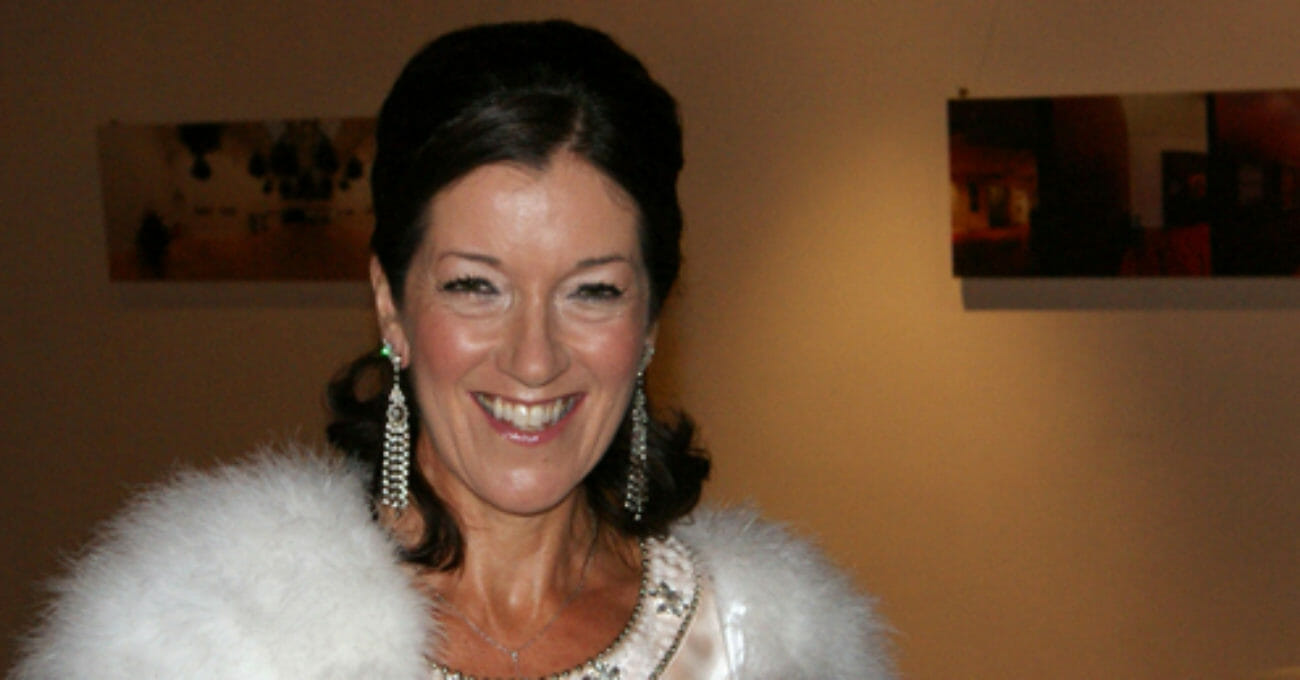
 Interview with Boyd Tonkin, The Independent, Friday, 14 October 2011 (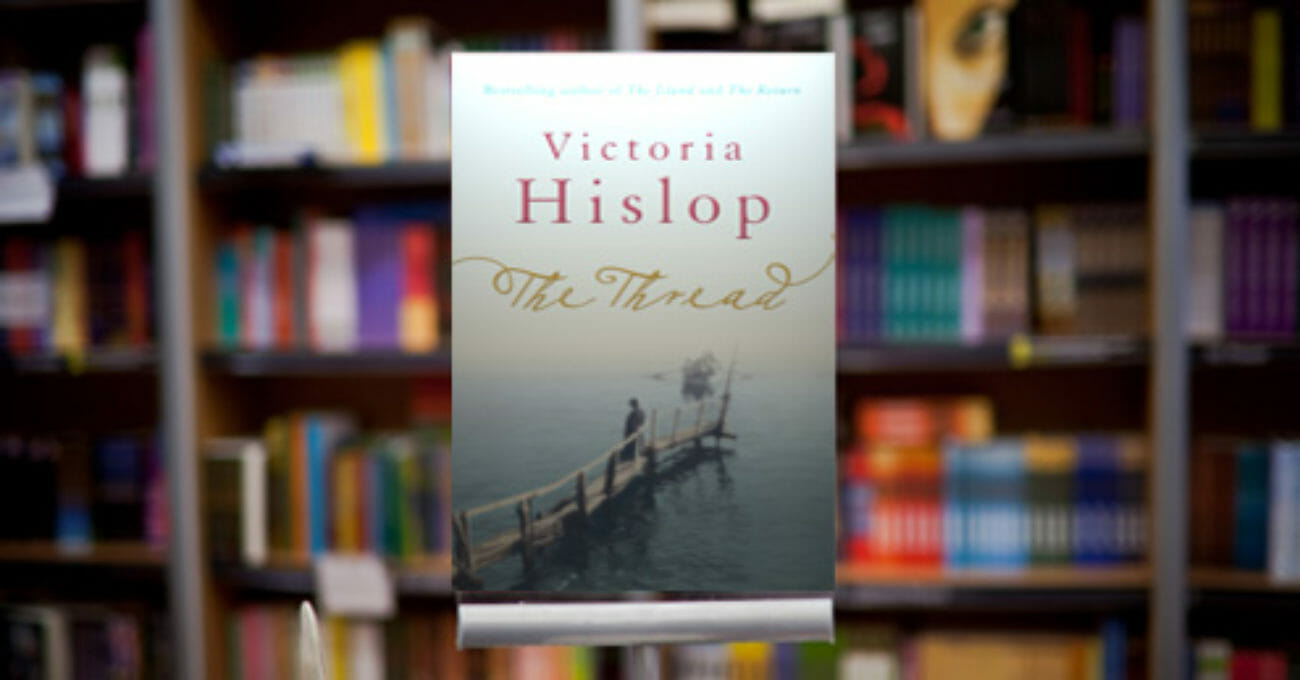




 Music “Κάθε Τρελό Παιδί” available on: