British author Victoria Hislop talks about her latest novel, inspired by 20th-century events in Thessaloniki
By Sandy Tsantaki
Greeks are likely most familiar with Victoria Hislop as the writer of “The Island,” an award-winning novel that was adapted for a TV series by Greece’s Mega Channel last year. While reading up on the British author, I was pleased to discover that she seems to know this country well and talks about it during her travels around the world.
The publication of her new book, “The Thread,” translated into Greek and published by Dioptra under the title “To Nima,” provided an opportunity for a conversation with the writer. In her latest novel, Hislop explores the history of 20th-century Thessaloniki, from the Great Fire of 1917 to the present day.
So prior to her arrival in Greece for a book tour with stops including Thessaloniki, Katerini, Larissa, Volos, Lamia, Patras and Athens, the author took some time to respond to a few questions about her most recent offering, as well as the Greek financial crisis and her impressions of the country in general.
How do you think readers of your previous works will respond to your latest novel? Do you believe it will stir up different emotions among your Greek readership to their foreign counterparts?
I think they will be familiar with my style and approach — that I write primarily with my heart rather than my intellect. So perhaps the same emotions will be stirred among readers. There are very sad things in this story — but also very optimistic things too. It is about survival — so that has to be optimistic.
I know that you’re very aware of the current financial crisis in Greece. What would you say is the best way to live with it?
If Britain faced the same situation as Greece, then I think we would all face it together in a united way. Yes, we would protest (we had huge strikes in the 1970s — when we only had very limited electricity — I did my homework by candlelight) but in the end we sometimes simply have to swallow our medicine — it is very bitter but it makes us better in the end. And I think that’s what has to happen here. Whatever the reasons behind this debt — there is only one way. And I hope your new prime minister will have everyone behind him. It seems to me that this is not the moment for “infighting” among politicians. The future will be better — it always is.
What made you decide to return to Greece again for your new novel?
I became fascinated by the story of the Population Exchange — and also the story of the Jews here. The fact that within only two decades, from 1923 to 1943, Thessaloniki was transformed from being a city with three equal sections of population (Christians, Muslims and Jews) to being only Christians was a very compelling one. And this seemed only the beginning of the story — the hardships that followed also drew me in and before long I had realized that there is a connection that links the events of those times with the situation of the present day.
How closely does the fiction of “The Thread” resemble actual reality?Is it based on real people and their true stories?
There are no true stories in “To Nima.” I research extensively with books (written mostly by British historians, and some translated from the Greek) and then imagined what it would have been like to live through them. So I did not interview elderly people — for me this is slightly dangerous, as a novel then becomes a work of nonfiction, and that is not my craft. Perhaps stories just as I fantasize did happen in real life — but there are no specific “life histories” to be found in the novel.
Do you think you could write a book with a happy theme?
I think in some ways, this book does have a happy theme — in that it is all about survival. Yes, there is plenty of loss, but not only that. It is about the strength and generosity of the human spirit. Just to write a story about people being happy… sounds a bit dull to me. There has to be conflict and resolution to make a good story.
Are there comparisons to be drawn between what was happening back then in Greece and how things are now?
The true events happening in the background of “To Nima” (from 1917 until 1978) were very tough and very hard to survive. And yes, there is certainly a comparison to be made — and definitely a link between what happened then and how things are now.
Do you find any similarities between Thessaloniki and Athens or any other city?
I think Salonica is fairly unique — though I haven’t visited every single Greek city yet (though it is on my agenda). But no other city ever had the title “Madre de Israel” (Mother of Israel) — or the “Jerusalem of the Balkans.” So Salonica definitely is unique in having been the home of the vast majority of Greece’s Jewish population. Geographically, Salonica is unique, with its position on the sea and all the layers of history that seem still to exist and to be visible there.
Is there one question that you wish to respond to but haven’t had a chance to yet?
Why the book is called “To Nima.” I love the Greek myth of the Moirae [the goddesses of fate who personified the inescapable destiny of man] — that the length of the “thread” of your life is predetermined, and this seemed to go well with the idea that all historical events are linked, or I could say “threaded,” together. As we would say in English, “One thing leads to another,” and I see this very clearly with the history of Greece in the 20th century — everything happening now somehow has its roots in the past. And writing this story has certainly helped my British readers see how much Greece has been through — and I hope this will make them more sympathetic too. And of course — all my female characters sew and weave in this story — so it is not just a metaphorical title! They do these activities in order to survive in a period of great hardship — and indeed to be creative too.
You successfully mix politics and history. If you were to choose politics as a profession, where would you like to be and why?
I am not sure I would survive as a politician, because I believe greatly in compromise — and I think politicians are usually very definite and very focused — and they often don’t really seem to listen to each other. I am very much a listener. Actually I think I might be a reasonable diplomat. Maybe an ambassador — that would be a marvelous career I think. And every five years I would move to a new country and learn a new language — and try to get countries to understand each other better.
You have compared your latest book to “an oriental rug.” What kind of descriptions of your work make you happy and which drive you mad?
Best criticism of my work: to put the spotlight on forgotten stories and to make readers hear forgotten “voices.” Criticism to drive me mad: in the UK I am often described as “light reading” — I suppose it‘s not such bad criticism — but I do think it trivializes.
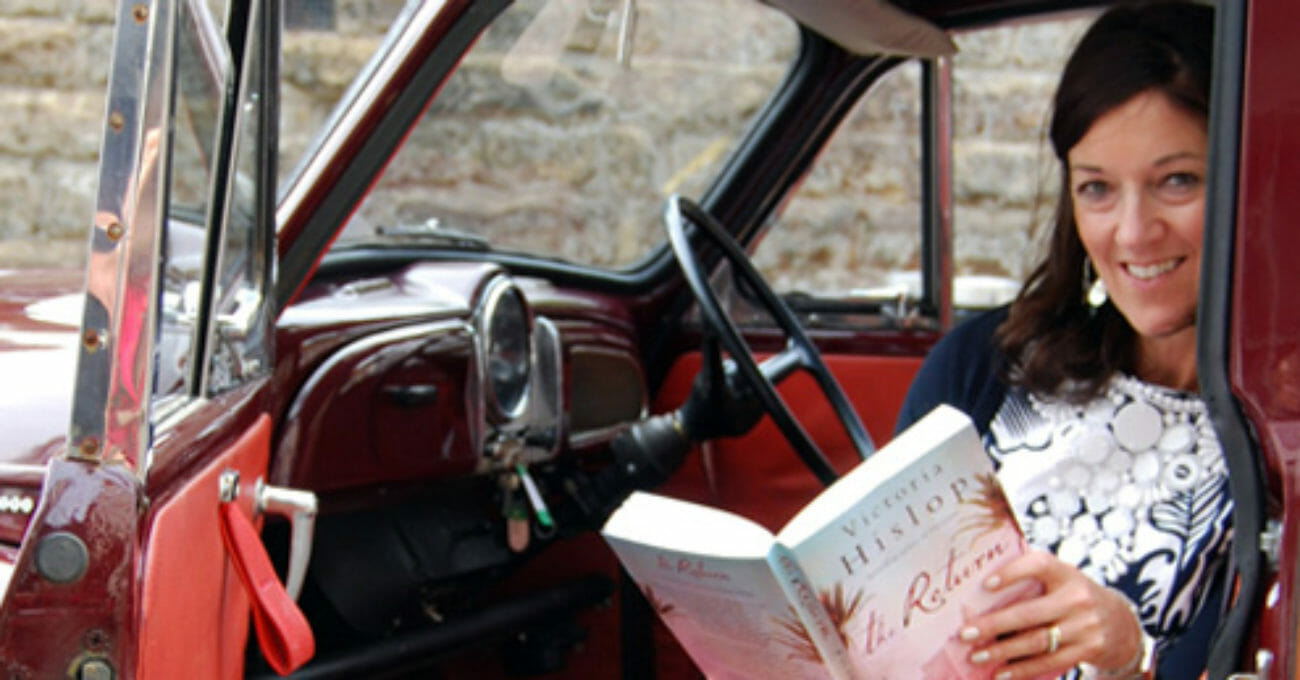
On BBC Radio 4’s “Open Book”, Victoria talks to Mariella Frostrup about the themes and the history behind her new novel “The Thread”, about her love of Greece, sewing costumes on the set of the TV adaptation of “The Island” and about why, despite her bestselling books, she still doesn’t call herself a novelist…
Victoria Hislop returns to Greece for her cocktail of history and romance
Interview with Boyd Tonkin, The Independent, Friday, 14 October 2011 (see original)
In 1810, that poetic vandal Byron carved his name into the columns of the temple of Poseidon on the coast at Cape Sounion near Athens. When a later Hellenophile author visited the same spot a couple of centuries later, another feature of the landscape caught her gaze. “There are these moments that happen, or places I go,” explains Victoria Hislop about the alchemy of a haunting place and a dramatic past that has turned her two historical novels into solid-gold bestsellers. At Sounion, “I was taken there to see the sunset by friends. It’s magical: no doubt about it. But what really interested me was this dark shape just off Sounion – which is Makronissos.” About this sinister “long island”, “They were very cagey”.
Hislop’s research, which feeds into the latter part of her third novel The Thread (Headline Review, £18.99), revealed that the island had for three decades after the Greek civil war of the 1940s served as a concentration camp where Communists and other radicals were jailed, tortured and “re-educated”. Her Med-set period romances may fill a million holiday suitcases. Yet she has brought something fresh, unusual and rather intrepid to an often vapid genre, with a tenacious attention to the tangled and controversial history that fuels her plots.
Civil strife in Greece ignited when, as the Resistance gained the upper hand over the occupying Germans, it grew clear that the Allies favoured the conservative forces. The left-wing fighters of the ELAS movement would not share the fruits of victory. Many readers of Captain Corelli’s Mandolin will recall Louis de Bernières’s ferociously anti-ELAS take on this bloody falling-out. Hislop approaches the history from a very different angle.
Even though “It’s definitely a civil war where both sides behaved appallingly,” she notes that “The Resistance fought the Germans all the way through the war… And then at the end of it, they’re shoved to one side, and these collaborators are handed back the country. I can see why that would have made them very angry… I think I would have been on their side.” Given the passions this internecine slaughter still arouses, it will come as no surprise that her Greek publisher now worries about local turbulence when The Thread appears there. So is the author ready for the flak? “I have to be. Yes, I think so. You can’t be afraid of these things. Otherwise you couldn’t write anything worth writing.”
[pull_quote align=”left”]”…weaving the yarns of memory into a satisfying pattern ‘like the interwoven threads of an oriental rug’.”[/pull_quote]
Chart-topping popular fiction rarely if ever sets out to navigate such stormy seas. The astonishing impact in both Britain and Greece of The Island, her debut novel in 2005, first pointed to Hislop’s flair for mixing bitter-sweet cocktails from the gentle sensations of a sun-dappled Mediterranean romance and the sour tang of a painful, and unresolved, past. That book took its army of readers to another offshore domain of secrets, the Cretan leprosy colony of Spinalonga. But, for all the hidden misery it unveiled, The Island healed more than it inflamed.
Hislop now calls it “quite a naïve book” as well as “a very, very affectionate portrait of the Greeks – certainly of Crete. It’s meant to be. I love that place. I absolutely do.” Her family – husband Ian, Private Eye editor and stalwart fall-guy of Have I Got News For You, and their two children – have a house on Crete, where she retreats to write. She has just returned from Crete, fretful about friends’ prospects amid their nation’s still-simmering financial crisis, when we meet in a club near Trafalgar Square on a day of Greek-standard sunshine.
Ian – who also studied English at Oxford, and in the same year – never reads her novels until she writes “The End”. “I’m good at taking criticism, but not from him… I try to make it the best it possibly can be before he sees it. It must be very annoying for him, because I don’t share. But he knows what country it’s set in because I keep going there, and books lie around.” With The Thread, however, he did suggest a crucial change to the ending, “and I knew he was right”.
Did Victoria Hislop ever consider publishing her fiction under another name? She explains why not. “I was working, when I got married to Ian, for a big PR company that was owned by Tim Bell”. This “megalithic organisation” of spinners won the contract to promote the NHS reforms of the late 1980s. “I was somehow part of this team that represented these ideas to the public.” Thus, in the Whitehall offices of the department of health, “I was handed the White Paper, marked ‘Top Secret'”. At the time, she still used her maiden name at work.
As she leafed through this red-hot document in the kitchen, her husband walked in. In the case of a leak, only one prime suspect would ever occur to investigators. “People in the company,” she decided then, “need to know that I’m married to the editor of Private Eye.” The next day, she quit the NHS project and, for the sake of transparency, began to use her married name professionally. Then came pressure from Bell himself. “He was always leaning on my boss to lean on me to say, ‘Can you ask Victoria to ask Ian to stop writing about me?’… I gave up PR as soon as I possibly could. But that’s the reason I use Hislop.”
After this second Hislop made big news with The Island, fans might have expected more of the same from The Return, set around Granada during the Spanish Civil War. But for all its gypsy mood-music and charming star-crossed lovers, that book – once more a number-one bestseller – fused its battle-front romance with a pretty uncompromising view of the war. She presented it not as a vague bloody backcloth but a world-shaking collision between decent, democratic values and Franco’s brutal fascism.
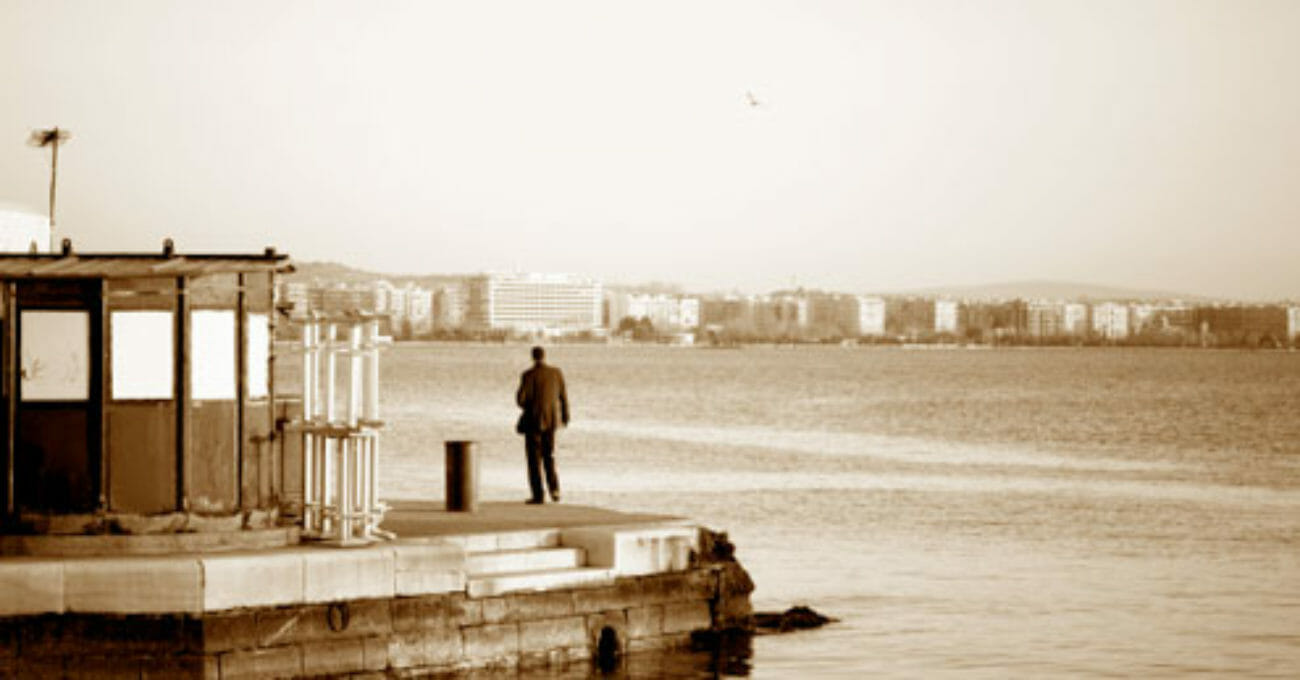
The Thread will again smuggle politics and history into the beach-bag and onto the weekend sofa. This time the focus – and a principal character – is the port city of Thessaloniki. Once the multi-cultural metropolis of Salonica, it became a Greek possession only when the moribund Ottoman empire yielded control in 1912-1913. Via a trademark Hislop time-shift, we drop back from the waterfront cafés of the modern city to 1917: year of the Great Fire that laid waste to old Salonica, and of the birth of the future couple whose path we trace through the upheavals of the Greek 20th century.
“The first time I went to Thessaloniki,” Hislop remembers, “was to give a talk at the university, which is probably the least attractive building.” Soon, though, “I came to love that city.” The Thread voices that passion, with especially warm evocations of the Muslim and Jewish communities swept away by the fatal tides of history.
“Lots of things came together” to compose the novel’s background, she says: “but it was principally that idea of the refugee, and what it means to be Greek”. Hislop, a Greek speaker, talked to the cast and crew during the filming for the Greek series of The Island – a giant hit with the country’s viewers, like the novel itself. She discovered how many had family roots in Asia Minor: “That got me very curious.” Helped by recent histories such as Mark Mazower’s landmark study Salonica: City of Ghosts and Bruce Clark’s Twice a Stranger, she saw what the influx of so many newcomers around 1923 had meant for the nation. “It’s the equivalent of suddenly having 12 or 15 million refugees coming into Britain.”
We know from the off that our protagonists will eventually meet and marry. Dimitri is the idealistic son of a gruffly patriarchal cloth merchant; Katerina, a refugee from Asia Minor separated from her mother amid the chaos of the mass migrations, happily adopted and now a nimble-fingered seamstress for the Moreno family of Jewish tailors. Hislop guides us through decade after decade of modern Greek catastrophes. From the war with Turkey and the population exchange that ended it (Christians came to Greece; Muslims went to Turkey), through the anti-Nazi struggle and the vicious feuds of the civil war, right up to the Colonels’ dictatorship and its lingering legacy, we understand via set-piece climaxes and domestic interludes of repose just how much the nation in general, and this city in particular, have had to endure and overcome.
With screens and newspapers now swarming with images of Greek unrest, Hislop hopes that her novel may help British readers to “see a bit below the surface” of today’s turmoil. “I learnt so much myself from doing the research,” she says. “I sympathise much more with why they are how they are.” For instance, when scolding Germans speak of debts and downgrades, many Greeks will think of the nation’s plundering by its Nazi occupiers.
She has friends who are “still angry at the way the country was bankrupted during the Occupation. It was done quite methodically – there was a monthly payment – in a legalised, bureaucratic way. At the end of the war, they had destroyed the roads and bridges. They had taken all the gold, taken all the food. There was nothing in that country.” Even now, “An 80-year-old man that you see sitting in a café in Thessaloniki: he will have seen all of it. He will remember eating a small piece of tripe and watering it down over a week, and have seen people – literally – starve.”
The Thread will entertain and enlighten legions of readers who, like it or not, would never pick up a historian such as Mark Mazower. Its oddly vehement political edge and fervent multicultural sympathies cut through the helpings of schmaltz and sentiment to generate Hislop’s characteristic sour-sweet flavour. That taste can clearly tickle the palate of millions.
“I don’t think I’ve been unfair,” she says. “I hope it’s balanced. And at the end of the day, my motivation is to help the English-speaking reader understand the complexity of what’s gone on in that country. So I’ve done it with the best intentions – but, mostly, because I wanted to tell the story. One day, I’d like to write a story that comes out of my head… But meanwhile, I find these points in history – and it’s a case of joining the dots, really.” Or, to adopt the book’s signature imagery, of weaving the yarns of memory into a satisfying pattern “like the interwoven threads of an oriental rug”.
Victoria talks to Jackie McGlone about “The Return” keeping secrets, and researching her third novel…
“VICTORIA HISLOP certainly knows HOW to keep a secret. No mean feat, considering she’s married to a man who has made it his business to uncover cracking news stories about the great and good doing bad things which they would prefer to remain hidden.The wife of the more famous Ian, editor of Private Eye and panellist on the popular BBC1 show Have I Got News For You, Hislop admits: “I am rather good at keeping secrets, especially from Ian.”
Indeed, she’s currently ferreting away all sorts of things from her nosy husband, including the small library of books she’s reading to research her third novel.
The other evening she was propped up in bed tapping away on her laptop, when Ian sidled up behind her and tried to read the words on her screen. “I slammed the lid shut,” laughs Hislop, a glossy-haired, slender woman on the cusp of 50, dressed in figure-revealing black, with high-heeled suede boots adding inches.
“He does try to sneak up on me when I’m writing, but I’m paranoid about talking about my work, so I’ve told him he’ll know where my next book is set when he gets the postcard from wherever it is that I’m planning to set it. I never show Ian my books until they are finished. He doesn’t say much about them, in any case. My daughter, who is 18, says she has my book by her bed, which means it’s waiting in the pile to be read. My 15-year-old son, however, has read my new book, The Return. He sent me a text saying, ‘Amazing, mum!’ It’s the best compliment I’ve ever had. I treasure it.”
“All I’ll tell you about the new book, though, is it is set somewhere hot. Erm, yes, it’s a Mediterranean country. And, ummm, aahh …” she hesitates. “… Err, secrets will be unravelled.” So far so formulaic, then. For torrid climates and ancient secrets are the currency of the bestselling novelist’s success. With a little help from Richard and Judy, when it was selected as their Summer Read of 2006, her first novel. The Island, sold more than a million copies, earning her an estimated £500,000. Her second, The Return, has just soared to the top of the paperback charts toppling mega-selling thriller writer, Lee Child, from the number one slot.
Both The Island and The Return tell of the uncovering of old family secrets. The first is a multi-generational narrative set in a former leprosy colony on Spinalonga, a Greek island off Crete, which Hislop and her family discovered when they were holidaying there. Her husband hates sitting on a beach, preferring to explore new places. The Return takes place in Granada and revisits the bloody conflict of the Spanish Civil War, which tore the country, and many loving families, apart.
Her books are unashamed beach reads – she jokes about being called “Queen of the Beach Read” – although Hislop has, in fact, single-handedly reinvented the holiday blockbuster, with her ambitious take on big historical events, reminding readers of the tragic past of the lands they now visit courtesy of easyJet. Indeed, thousands this summer will read The Return while sunning themselves on Spanish beaches and learn some unpalatable truths about their holiday destination, noted one reviewer.
Formerly a travel writer, Hislop has certainly smartened up the genre. “A beach book with heart,” claimed the Observer of The Island, which is currently being filmed as a 25-part serial for Greek television, but with the addition of some steamy sex scenes which aren’t actually in the book.
Incidentally, that critic might have added that The Island is also a book “with brains”, for Hislop’s books are for thinking sun-worshippers, even if they do include those blockbuster staples: adultery, murder, love and passion triumphing against great odds.
The Return is every bit as gripping as The Island, and is impossible to read without a box of Kleenex by your side. It tells of Sonia Cameron, who is unhappily married to a “dusty” husband, with a serious drink problem. Oblivious to the past, she travels to Moorish Granada, with a wild-child girlfriend, in search of escape and salsa lessons.
Through dance she discovers a new lease of life. By chance, she also meets an elderly cafe proprietor, who recounts – in a riveting third-person narrative that makes up the best part of the novel – the story of the death of the great Spanish poet, Lorca, and of the Ramirez family.
His moving tale follows the family’s misfortunes during the Spanish Civil War, telling how the battle of memory against forgetting is still being fought on all fronts.
“In the wake of the military coup led by General Franco, in 1936, the three-year civil war devastated the country,” says Hislop, adding that many Scots made a notable contribution, fighting for the Republican cause, and her book is unashamedly biased anyway, since it’s written from the Left-wing perspective of the war. “When I read from the book in England at author events, I always have to explain the context. People in Scotland never need that. They ask such intelligent questions and they always tell me things I never knew,” she says.
Half a million people died in the conflict and an equal number went into exile. After 1939, hundreds of thousands of Republicans still languished in prison and many faced the firing squad and burial in unmarked graves.
Those who had fought against Franco experienced years of repression and even when the fascist dictator died in 1975, many people in Spain still remained silent about their experiences. The friend with whom Hislop stayed in Granada while researching her novel refused point blank to discuss the past with her. It troubles her that she has been unable to find out why the shutters came down when she mentioned that she would be writing a novel about the civil war.
“Why, why do you want to write about it? It’s got nothing to do with you,” her friend said, then refused to talk about it to her.
“Of course that made me even more interested as I am sure he has a family story to tell,” she says, pointing out that, as holidaymakers, many of us might even have been lying by the sea in Benidorm, say, while elsewhere, people were still being executed in the mid-1970s.
“There was, in effect, a “pacto de olvido”, a pact of forgetting,” says Hislop, when we meet over morning coffee in the cafe of a Tunbridge Wells department store – the Hislops and their children live in the nearby village of Sissinghurst. She’s on her way to a book signing, otherwise we would have met at the family home. A wattle-and-daub house, it is 500-years-old and apparently, it’s a miracle it’s still standing.
Carefully stirring her coffee, she notes that many people who fought on the Left were unable to publish anything about it. Now, almost 70 years since the civil war ended, that pact has finally been broken. And that, believes Hislop, is a cause for celebration, despite the revisionist historians on the Right who still insist that the repression of the Left is a myth. “Many people have not told of course, people like my friend clearly still have secrets they do not wish to reveal.”
A warm, lively conversationalist, she is no stranger to long-buried secrets herself and it’s tempting to play the amateur psychologist and suggest that this is why she writes so well about such matters since they echo her own past.
BORN Victoria Hamson, in Kent, her childhood was difficult, unconventional and sometimes unhappy. Her father drank too much – which explains the accuracy with which she writes about Sonia’s alcoholic husband in The Return – and often directed his unreasonable anger towards Victoria. “I have no idea why this was,” she sighs.
“I felt he neither loved nor liked me very much. It hurt terribly. I really don’t know why I annoyed him as I worked very hard at school and tried to make him proud of me. Now I’ll never know, because he died several years ago. He wasn’t like that with my lovely sister, Anna, who is 18 months older than I am.”
Now that she has children herself – Emily (18) and William (15) – she finds her father’s behaviour even more inexplicable, especially since her husband is such a devoted father, despite the fact that their children are both so bright and eloquent neither he nor his wife can ever win an argument at home. “We always lose in the battle of words,” she laughs.
Their father’s televisual fame used to embarrass the siblings dreadfully when they were younger, she says. “It’s a bit of a drag having a parent on the telly, I think. But Ian’s famous because people like watching him and Paul Merton – who’s become a real family friend – so we can’t really complain.”
When Hislop was 30, she discovered a secret that changed her perspective on life – her parents had had another daughter before she was born. One evening during an interval at the theatre – her father had by then remarried and had two younger children to whom she’s now close – he referred in passing to having had five children. She knew of only four.
Was there some living, secret child, she wondered as she sat uneasily through the second act of the play, her emotions in turmoil, her mind reeling with shock. She was desperate to know more.
It emerged that her sister, Sonia, had died of an asthma attack at the age of three and that her brief life had been wiped from the family record. Her parents had put away all of her pictures and then they must have told everyone not to mention her, Hislop believes. “I knew nothing about her at all because there was no reference to her – ever. It just seemed so incredibly sad. But that was how they dealt with grief in the Fifties. There were no bereavement counsellors and people were not encouraged to grieve openly the way they are now.”
No other family members went to Sonia’s funeral, only her parents. The tragic story haunted Hislop and when she finally discussed it with her mother she understood that trying to forget was how things were done 50 years ago. That’s what her parents attempted to do. “Now, I realise it must have been awful for them,” she says.
There were more skeletons in the family cupboard, though. When her parents finally separated, she was in her teens. Her father had pretended he was leaving the family home because he’d been made redundant. For many years, Hislop believed he had moved to Warwickshire because he’d found a job there. In fact, he had a mistress and was dividing his time between two women, two homes and two families. Meanwhile, her mother was almost in penury and supported her two girls by taking a job as a cook and maitresse d’ in a restaurant. Hislop’s abiding memory is of her mother cycling off in a long skirt in the evenings to work, but she was always there with tea and home-made cakes when Victoria and Anna came home from school. “She was so loving, so very maternal!” she says.
These are memories she treasures because she’s always had a wonderful relationship with her mother, who is now in her eighties and lives close by in Tunbridge Wells.
Hislop was a student at Oxford University – where she and Ian met and fell in love, “a whirlwind romance” that culminated in their marriage eight years later – when her father finally confessed to his long-running affair. She met her stepmother Cherry, whom she likes very much, and two half-siblings, Rose and Jack, both now in their twenties, and immediately liked them, too. “They are beautiful children,” she says, adding that she adores her second family.
Pausing to sweep up the crumbs of her toast, Hislop says: “You know, all families have secrets.” Perhaps some have more secrets than others? For instance, her mother has told her how her grandmother, who lived with them when she was a child, had grown up in a mental institution run by her father. One of her sisters had an affair with an inmate, which produced an illegitimate daughter who was adopted. Later, the great-aunt married another patient, a bigamist, who claimed to be a lord.
All of this was so shaming at the time it had been swept under the carpet for years, adds Hislop, who, having been a journalist, is imbued with lively curiosity about her own family’s clandestine past as well as that of others. “Everyone has a story to tell about their family secrets,” she insists, gently quizzing me about mine.
Her own husband discovered his secret Scottish heritage when he took part in the BBC series Who Do You Think You Are? and found that his grandfather was a soldier from Ayr, who helped free France in 1918, and that his great-great-great-grandfather was a crofter from Stornaway in Lewis. “He’s terribly proud of his Scottish roots – he’s entitled to wear the Matheson tartan,” she says. And, not many people know this, he’s a demon Scottish dancer, who can be found on Burns night in Tunbridge Wells doing a very merry Gay Gordons.
Meanwhile, his wife is passionate about Latin American dancing; Ian, unsurprisingly, is not “a salsa type”.
Like the heroine of The Return, Hislop originally went to Granada to learn to dance because she wanted to write a novel about dance; then, like Sonia, she stumbled across stories about the civil war. “I love music and I love to dance. I even dance in my kitchen when I’m cooking.
“I don’t like silence. To me both music and dance are more important than words,” she confesses, adding that she also plays the violin, usually in duets. “It really is unlike anything else one does.”
Before they moved to the country, she had started learning to dance in London. Then she discovered to her chagrin that there were no courses available in Tunbridge Wells. Such is the mania for dance in Britain today, though, that there’s even a salsa class in her local village hall.
She will be salsaing again soon when she returns to Spain for the publication of the Spanish translation of The Return. The fiendishly difficult Gypsy art of flamenco is beyond her, however, she says, adding that she’s also done a crash course in line dancing and belly dancing for a magazine feature. “Salsa is marvellously simple. I’m hooked on it.
“We even stay in on Saturday nights so that I don’t miss Strictly Come Dancing when it’s on.”
Dancing makes her happy. Surely being married to the quick-witted Ian her life is full of laughs anyway?
“Ian is actually a very serious person,” she replies. “Although he can be hysterically funny. He is domestically challenged and has been known to make cucumber sandwiches for the children using a courgette – a story I used in The Island, by the way. About twice a year, he prepares a meal but he does it in the manner of a TV chef – we all sit in the kitchen weeping with laughter, because he’s so funny.
“He’s not always amusing, though. That would be boring.”
Victoria Hislop’s first novel, The Island, was an international bestseller. It was about Spinaloga, the island housing a leprosy colony off Crete. For her second novel, ‘The Return‘ she tackles another difficult subject: the Civil War which tore Spain apart during the 1930s.
Her protagonist, Sonia, travels to Granada to celebrate a friend’s birthday and to follow her new passion: dance classes. But her holiday leads to a crucial discovery about her own family history, which proves to be life-changing. Victoria Hislop joins Jenni Murray to reveal why the land of flamenco, castanets and a buried history of violence, captured her imagination.
We use cookies on our website to give you the most relevant experience by remembering your preferences and repeat visits. By clicking “Accept All”, you consent to the use of ALL the cookies. However, you may visit "Cookie Settings" to provide a controlled consent.
This website uses cookies to improve your experience while you navigate through the website. Out of these, the cookies that are categorized as necessary are stored on your browser as they are essential for the working of basic functionalities of the website. We also use third-party cookies that help us analyze and understand how you use this website. These cookies will be stored in your browser only with your consent. You also have the option to opt-out of these cookies. But opting out of some of these cookies may affect your browsing experience.
Strictly necessary cookies are absolutely essential for the website to function properly. These cookies ensure basic functionalities and security features of the website, anonymously.
Cookie
Duration
Description
__cf_bm
30 minutes
This cookie is set by CloudFlare. The cookie is used to support Cloudflare Bot Management.
__cfduid
1 month
The cookie is used by cdn services like CloudFlare to identify individual clients behind a shared IP address and apply security settings on a per-client basis. It does not correspond to any user ID in the web application and does not store any personally identifiable information.
_icl_visitor_lang_js
1 day
This cookie is stored by WPML WordPress plugin. The purpose of the cookie is to store the redirected language.
bp-activity-oldestpage
session
This cookie is set by the provider Buddy Press activity. This cookie is used for storing the information when navigating through the pages. It helps to provide a "load more button".
cookielawinfo-checkbox-analytics
11 months
This cookie is set by GDPR Cookie Consent plugin. The cookie is used to store the user consent for the cookies in the category "Analytics".
cookielawinfo-checkbox-functional
11 months
The cookie is set by GDPR cookie consent to record the user consent for the cookies in the category "Functional".
cookielawinfo-checkbox-necessary
11 months
This cookie is set by GDPR Cookie Consent plugin. The cookies is used to store the user consent for the cookies in the category "Necessary".
cookielawinfo-checkbox-others
11 months
This cookie is set by GDPR Cookie Consent plugin. The cookie is used to store the user consent for the cookies in the category "Other.
cookielawinfo-checkbox-performance
11 months
This cookie is set by GDPR Cookie Consent plugin. The cookie is used to store the user consent for the cookies in the category "Performance".
lang
This cookie is used to store the language preferences of a user to serve up content in that stored language the next time user visit the website.
PHPSESSID
session
This cookie is native to PHP applications. The cookie is used to store and identify a users' unique session ID for the purpose of managing user session on the website. The cookie is a session cookies and is deleted when all the browser windows are closed.
viewed_cookie_policy
11 months
The cookie is set by the GDPR Cookie Consent plugin and is used to store whether or not user has consented to the use of cookies. It does not store any personal data.
wpml_browser_redirect_test
session
This cookie is set by WPML WordPress plugin and is used to test if cookies are enabled on the browser.
Analytics cookies are used to understand how visitors interact with the website. These cookies help provide information on metrics the number of visitors, bounce rate, traffic source, etc.
Cookie
Duration
Description
__qca
12 months
This is an analytics cookie set by Quantcast Measure. You can opt-out of all measurement by Quantcast via their site.
_ga
2 years
This cookie is installed by Google Analytics. The cookie is used to calculate visitor, session, campaign data and keep track of site usage for the site's analytics report. The cookies store information anonymously and assign a randomly generated number to identify unique visitors.
_gat
1 minute
This cookies is installed by Google Universal Analytics to throttle the request rate to limit the colllection of data on high traffic sites.
_gid
1 day
This cookie is installed by Google Analytics. The cookie is used to store information of how visitors use a website and helps in creating an analytics report of how the website is doing. The data collected including the number visitors, the source where they have come from, and the pages visted in an anonymous form.
Marketing and advertising cookies are used to provide visitors with relevant ads and marketing campaigns. These cookies track visitors across websites and collect information to provide customized ads.


 British author Victoria Hislop talks about her latest novel, inspired by 20th-century events in Thessaloniki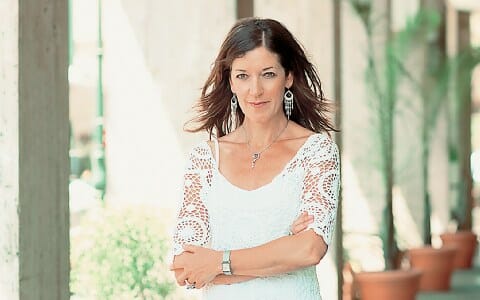


 Interview with Boyd Tonkin, The Independent, Friday, 14 October 2011 (