The Figurine is set during the period of the Junta army dictatorship in Greece in the 1960s and 1970s, and Victoria’s story was inspired by the Cycladic figurine and the influence they had on 20th century art. She wanted to explore the crime that beauty and antiquity can drive people to.
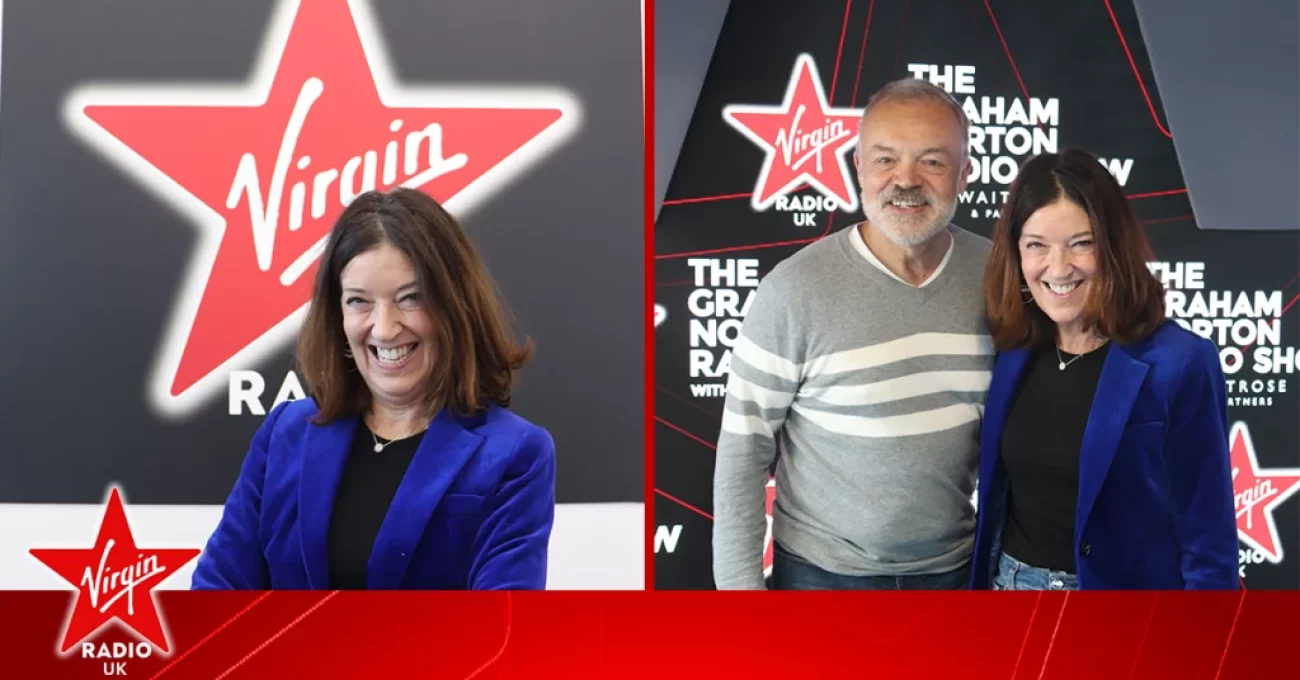
Speaking on The Graham Norton Radio Show with Waitrose, The Island writer revealed that the statutes, most of whom are women and found by grave sites, are actually illegal to buy and sell, and the genesis of her story came from the argument over antiquities in museums thousands of miles away from their home.
I always feel guilty that I don’t read every issue of Private Eye from cover to cover (my husband, Ian, is the editor), but I always catch up with the Private Eye Annual, which has the very best of the year’s jokes. And then I annoy him even more by reading bits aloud!
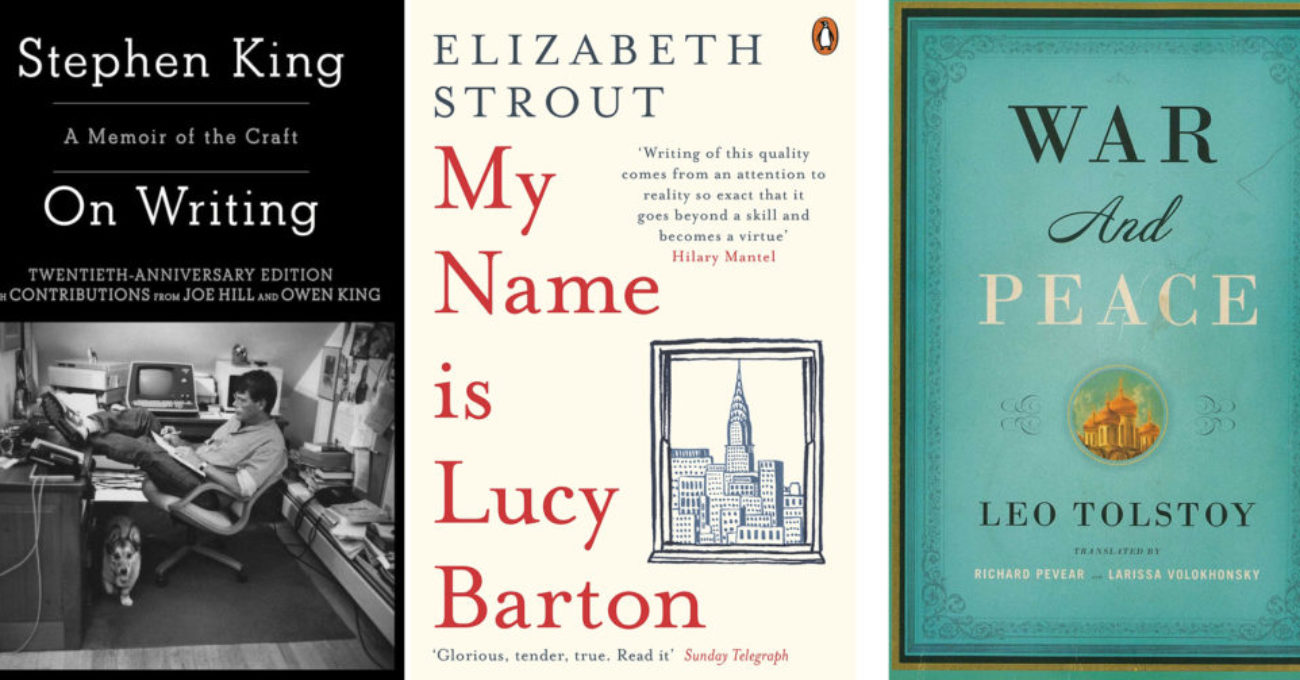
THE LAST BOOK THAT MADE ME CRY
I was washed away by myown tears when I finished My Name Is Lucy Barton by Elizabeth Strout. The combination oft her protagonist’s memories and revelations was heart-rending and yet I never once felt I was being manipulated simply for the sake of sentimentality. The writing was brilliant and spare and I was completely caught up inside the woman’s life and, indeed, her mother’s.
THE BOOK THAT CHANGED THE WAY I THINK
The concept of how small pattern of our lives is a gripping one – and I loved the way The Midnight Library by Matt Haig treats the whole ‘sliding doors’ notion. It was deceptively simple, but the concept very profound.
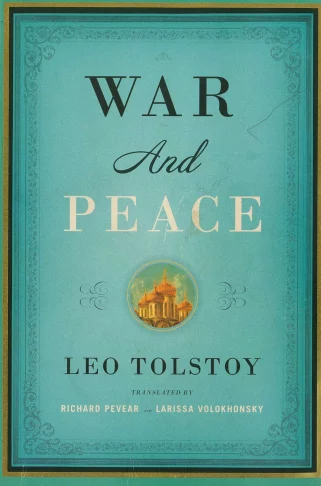
THE BOOK THAT GOT ME THROUGH A DIFFICULT TIME
I read War And Peace by Leo Tolstoy during lockdown, along with my son. We had a book group for two! It needed long stretches of tranquil time and near solitude to read it, but it was sanity-saving to be so absorbed by a work of literature. Most importantly, it is the best book I have ever read. Flawless in every way and I with some of the most memorable characters in literature
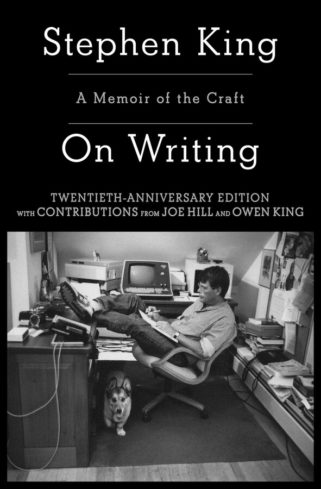
THE BOOK I MOST OFTEN GIVE TO OTHERS
I often get asked for writing tips, and my answer is to give people On Writing by Stephen King. I have bought literally dozens of copies. For me, it is the writer’s bible and gives the best (and only) advice worth giving. It’s both funny and shocking sometimes – and
Jules, Rebecca, Rachel and Emma chat with Victoria Hislop about her latest book, The Figurine. We also talk about Greece, archaeology, Strictly Come Dancing and book recommendations
My autumn reading will be a mix of comfort and challenge with the occasional diversion into something chilling. I tend to alternate between non-fiction and fiction, from more gentle reading to something exciting (though rarely hardcore crime). I think if we read in the same genre all the time, then one book starts to get blurred with another.
Autumn is such a wonderful time to read. The only reason I find longer evenings bearable is because I can sit down a bit earlier with a book. I am quite puritanical and, except when I am on holiday, I always think the sun should have gone down before I curl up with a novel (it’s not unlike my rule for a glass of wine!). These are the books I recommend this autumn…
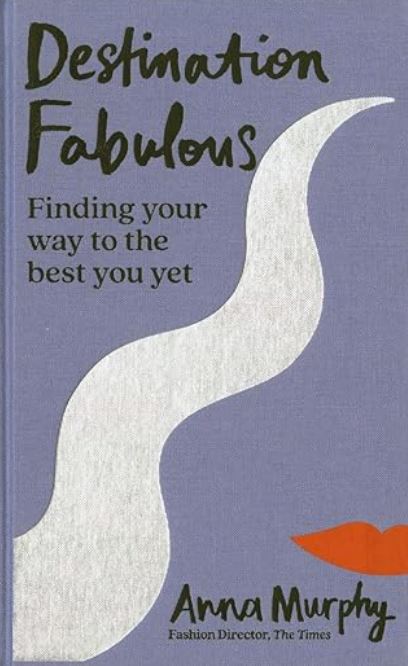
Anna is Fashion Editor of The Times, but this is not a book only about what to wear. It is about the joy of ageing and accepting its challenges, and, in fact, being excited about it.
Wonderfully realistic, it is also exhilarating and gives huge encouragement to anyone over fifty that this is just a beginning. I am almost sixty-five and everything Anna has written here resonated with me. And, of course, there is some guidance on how to look! She exhorts us to be bold and wear bright colours – I have already shopped for something other than my usual autumnal black.
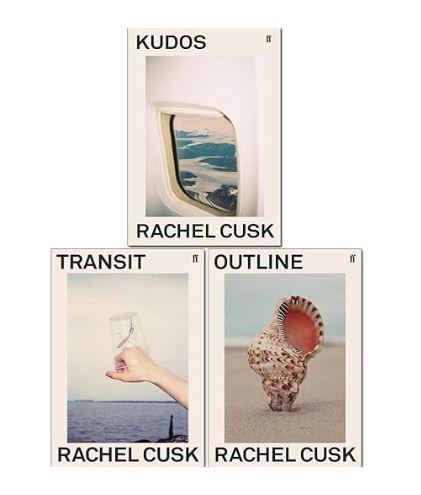
This is a trilogy, but each one is brief, and it’s impossible not to read them all (maybe with a gap between each one). I have become a huge fan of Cusk. She writes with such daunting honesty and frankness (in the first person) and describes ordinary people and their lives in such a way that they become extraordinary.
An apparently simple encounter becomes the inspiration for many chapters. Like all the best writers, Anne Tyler and Elizabeth Strout for example, the style is deceptively simple, but the words lived with me long afterwards.
This is Norris’s new novel, and he is hugely gifted.
With a light touch he writes about life and loss, what influences us, and making decisions, all in a very flowing style.
Although there is plenty of pathos here, it’s a hopeful book. I think we need optimism both in our lives and in our reading – and I think this is especially true as the days get shorter.
Everyone needs a good thriller in autumn – and the best writer in the genre is Stephen King. He never lets me down.
Billy Summers is about a hired killer. A likeable hired killer. At the beginning I found it hard to believe that this character could be in anyway sympathetic, but soon I was completely engaged by him and persuaded that in some way he would be doing the right thing by killing another man. This demonstrates that King must be among the world’s best storytellers because he can manipulate his readers, as well as his characters.
When Billy Summers faces extreme jeopardy himself, the heart literally palpitates – and without giving away what happens at the end, it left me in floods of tears. King took me to a whole other environment, a totally alien world.
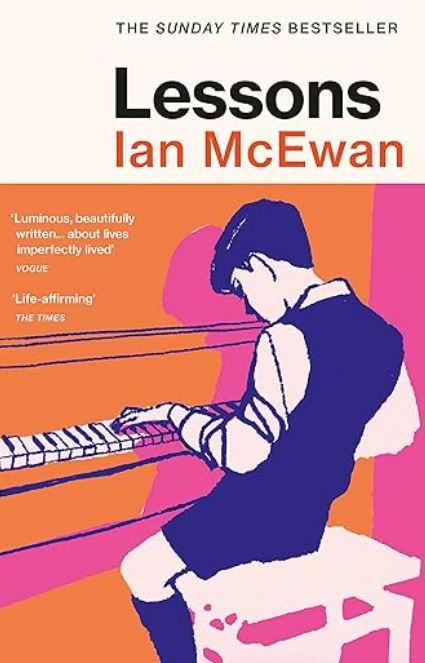
And then into the reassuring company of Ian McEwan, who is one of the best writers in the English language, someone who constructs sentences so perfectly there is never one word too many or too few. Each of his novels has taken me into new territories and faced me with new ideas.
Lessons reads convincingly like a believable biography, but I daren’t imagine it is. It begins with the protagonist as a fourteen-year-old boy who is seduced by his piano teacher. This becomes a relationship, an obsession, a secret, that will have an effect on the rest of his life.
It sounds like an uncomfortable start, but the novel goes on with many others musings on life and mortality – and with more than 500 pages it’s perfect for many long evenings of reading.
As Annabel Croft takes to the dance floor five months after her husband’s death, her friend VICTORIA HISLOP reveals why the ballroom could be the thing to distract her from devastating heartache
Her grief was all too apparent. ‘It’s been a terrible, terrible time,’ said Annabel Croft recently, reflecting on the five months that have passed since the death of her beloved husband, Mel Coleman, aged 60, just weeks after being diagnosed with stomach cancer.
‘There’s not been a day I haven’t cried.’
Along with mutual friends, I had the pleasure of spending some happy New Year’s Eves with lovely Annabel and Mel. He was wonderful.
So I can absolutely see why Annabel has signed up to compete in this year’s Strictly Come Dancing. Because, while there’s no magic bullet to cure heartache, no secret medicine that erases life’s troubles and restores a lost sense of joie de vivre, Strictly is one thing on the planet that may help distract Annabel from her immeasurable loss.
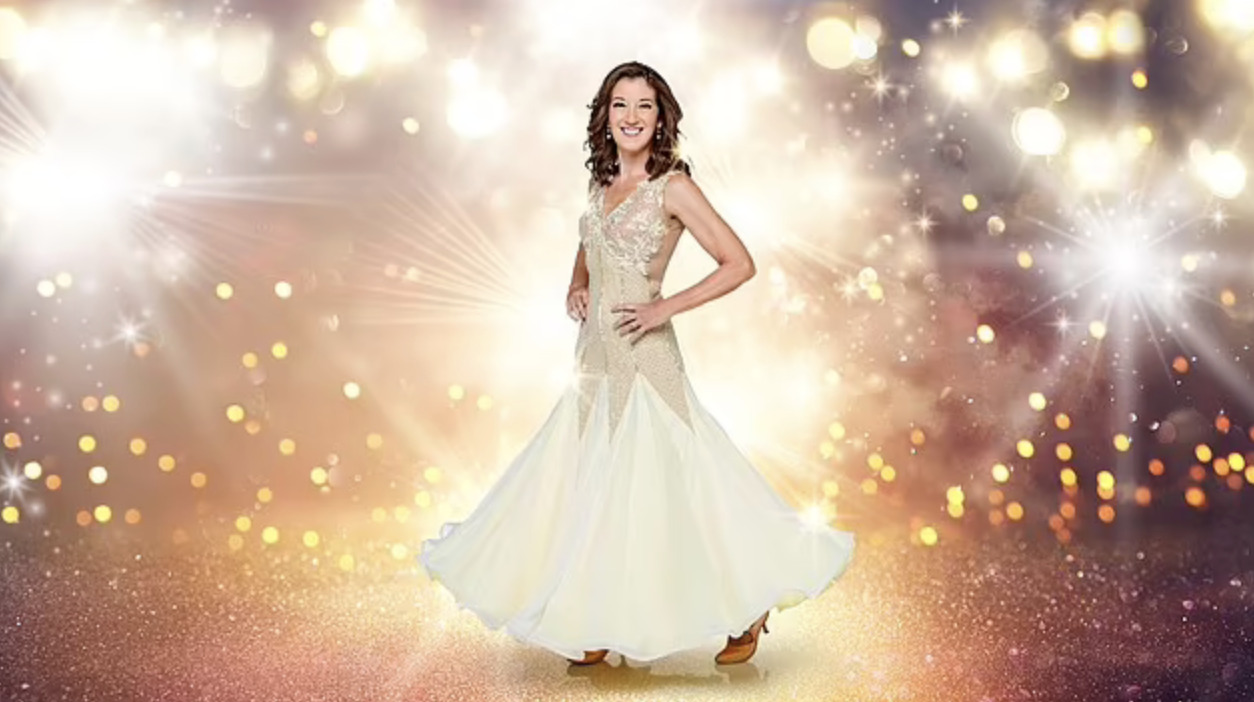
I discovered this myself when, in 2021, while in painful rehabilitation from breast cancer surgery, I was offered the chance to appear on the Greek version of Strictly, known there as Dancing With The Stars.
When I was asked, at first I hesitated. I was so low, I could barely get out of bed. I had scars from my operation. I ached all over. I felt nearer 90 than 60. But after giving myself a good talking to, I agreed — and it was one of the best decisions I have ever made.
Undoubtedly, there were hard moments — like when I was criticised by the judges and told to be sexier, more ‘out there’. Somehow, I always refrained from yelling back: ‘Hey guys! I’m doing my best. I’m 62 and arthritic! My left arm is restricted because of surgery! Give me a break!’
But I overcame it all. I didn’t just survive on Strictly — I thrived.
So I will be watching dear Annabel and rooting for her. And also for Strictly professional dancer Amy Dowden, who will not be performing this year because she has breast cancer. No doubt she will be missing the intoxication of the dance floor. Indeed, I do myself.
It was at the end of 2020 that I went for my mammogram. Past scans had never shown anything untoward and I was relaxed about it. As the nurse squashed my breasts between the glass-plates, I made a joke about how small my cleavage is.
She took a little longer over the left breast and asked me to wait while the radiographer checked the images. Five minutes later a sweet man called William came out of his office next door. He told me there was something he wanted to take a closer look at.
On screen, was a dark mark on the fuzzy image of breast tissue — my breast tissue. He got me to feel it for myself and I was shocked to feel a distinctive lump. Despite my own (admittedly casual and often too spaced apart) self-examinations in the shower, I’d been completely unaware of it.
He said he would like to do a biopsy there and then. It took just a moment but was like being punched for a fraction of a second. He taped me up and, even before I had left hospital, I was given a date with a breast surgeon to find out the result. Gut instinct told me it was cancer. I had no doubt.
Friends were coming for dinner that night so I went home and made a spectacular fish pie, saying nothing about what had happened.
Before the appointment to receive the diagnosis ten days later, I went for a blow-dry and picked a completely inappropriately glamorous shirt with diamanté buttons from my wardrobe. I suppose I wanted to look like I was in control of the situation, not the nervous wreck I was inside.
The surgeon seemed to be watching me closely as he gave me the test result. ‘It is cancer,’ he said.
He paused, then added: ‘You don’t seem surprised.’
‘I’m not,’ I replied, ‘It’s 2020.’
This was the sting in the tail of a year none of us will ever forget. After all, Covid stole months from our lives and, for many of us, loved ones, too. I had lost my mother at the beginning of the pandemic.
Yet I felt calm. I was in good hands and was offered surgery — a lumpectomy — a few days before Christmas, which seemed ideal as I wanted it to be over with as soon as possible.
I enjoyed so much love and kindness from family and friends over Christmas I was able to put all anxiety out of my head, until the day of the follow-up appointment, halfway through January.
My mother had gone through breast cancer at the same age. Despite more primitive and less successful forms of treatment, she had survived and lived for more than three decades. Like her, I was hoping to be lucky.
And I was. Thanks to the timely mammogram, the cancer had been caught early. There had been no spread into my lymph nodes, nor to any other parts of my body.
The only follow-up treatment was three weeks of daily radiotherapy and then a standard drug taken by many women who have had hormone-receptive breast cancer: Letrozole, which suppresses your hormones. I felt so fortunate. I had got through it all and felt almost on a high.
Only a few months later did I find myself sinking. During treatment there is a sense of purpose, activity — but when that period ends, there’s more time to reflect.
The Letrozole drug I was taking had started to have side-effects, too. My body ached. My concentration was poor. Even if I looked similar on the outside, I had lost my sparkle.
Then, one July afternoon, I got a call from Greek TV producer Fenia Vardanis, one of the original team who created Strictly for the BBC. Fenia had recently moved back to her homeland and was now producing the programme in Athens.
After my first novel, The Island — about a leper colony off the coast of Crete — was published in Greece, it was adapted for Greek television. Over 26 weeks, the streets went silent every Monday night when an episode was aired.
Two more of my novels were subsequently televised. After learning Greek during the first adaptation, I had appeared many times on TV before, in 2020, being awarded honorary citizenship by the President for promoting Greece and its culture around the world. All in all, it was more than enough to qualify me as a ‘celeb’ for their Strictly.
The moment Fenia asked me to take part, I felt light-headed. I needed something to lift my spirits and to get me out of what felt like a ditch. Was this it? I had long been a Strictly fan, inspired by the level of skill amateurs can reach. Happy to dance in private, like most female viewers I had often fantasised about what it would feel like to be held aloft by Johannes Radebe (my all-time favourite) or Giovanni Pernice.
But there was a huge list of ‘cons’, so I asked for a week to think it over. For the following days, my stomach lurched when I pictured myself on stage, performing live.
I would have to be away from London for months. My Greek might not be good enough to understand when I was being berated for sloppy footwork. My bunions would never squeeze into dancing shoes.
Would the backless or possibly semi-frontless costumes suit me? What if I was the Greek Ann Widdecombe, there for comedy value? While I usually have to be dragged off the dance floor at parties, could I strut my stuff on television?
Would a Pilates class twice a week for the past decade and the odd game of tennis have made me fit enough? And, of course, there was the biggest reason to say ‘No’ — I had just had cancer.
However, Feel The Fear And Do It Anyway has always been my favourite self-help book. In its spirit, I told myself: ‘Let’s make the biggest reason for saying ‘No’, the best reason for saying ‘Yes!’ ‘
I called Fenia to accept. A full medical followed and a few days later, on paper at least, I was declared fit. Then began a journey, an odyssey in every way.
My professional dance partner was called Tilemachos (named after the son of Odysseus). He was blond, slim, olive-skinned, with perfect cheekbones.
The other professionals and their plus-ones, all Greek, were much younger than me: Olympic athletes (one a gymnast), a recent Eurovision entrant, Greece’s Top Model, a recent winner of Master Chef, a famous actor, popular musicians, gorgeous TV presenters, a well-known rapper, a blogger and an influencer among them.
A happy group, we were encouraging rather than competitive.
Yet I soon realised my plan to dance in the day and write in the evening was a fantasy. I had just a few weeks to perfect the English Waltz for my first ‘live’ dance. So as well as practising all day, I relentlessly practised steps at home, spinning between hall, kitchen and living room in my small flat, videoing it all on my phone, which I balanced on the radiator.
Every week one of my many friends in Athens would come to the live recording, or a friend or family member would fly out from London, but apart from that my only companions were the other dancers. But the isolation allowed me to focus.
And every day I got better. I sensed real pride (and surprise, perhaps) in the reactions of friends and family back in London.
Week after week, I was zipped, hooked (and sometimes sewn) into the most glamorous dresses.
Many are seen on the UK Strictly as the wardrobe itself tours the world. My first costume, a golden ballgown, had already been worn by Amy Dowden in London.
And the pampering! My body was spray-tanned, my face contoured, lashes extended, nails shellac-ed. It made me feel a billion dollars. Added to this, the sense of achievement and joy of new friendships formed the ultimate recipe for recovery from the darkness I’d felt.
There were challenges: the Waltz needed a strict ‘pose’, a tilt of the head that seemed unnatural to me. I ended up with such a stiff neck I was sent twice a week for physiotherapy. Yet deep tissue massage, neck-cracking, even reiki did nothing to shift my agony.
As well as my neck, my whole body ached and my feet swelled like rugby balls. The small discomforts of cancer surgery were nothing compared with this.
But I pushed through, and in the evenings sat with my feet in a bucket of frozen peas then lay in a hot bath for an hour. I only got through performances with unhealthy quantities of painkillers, ibuprofen gel and scorchingly hot heat patches on my back.
Alcohol wasn’t allowed before performing, so I resorted to the calming Bach’s Natural Remedy with its flower extracts and grape spirit, spraying it discreetly into my mouth in the Green Room.
Our move to Latin dances saw sparks begin to fly — not with passion! — between handsome Tilemachos and me. He expected me to make very fast progress and one day told me to do the splits.
‘Hold on,’ I shrieked. ‘The splits? Can your mother do the splits?’
‘Oxi. No,’ he replied sheepishly.
‘Well, neither can I!’
His mother was a few years younger than me, I reminded him.
Quite often, I left rehearsals to sob quietly, and found someone else in the Ladies doing the same.
Dancing brings everything to the surface. The combination of tiredness and stress is intense. And it’s emotion that makes a great performance, even if there are tears and tantrums, too.
I’m sure Annabel will be able to channel all her emotions into brilliance on the dance floor.
Indeed, the night I danced the Salsa (without doing the splits) and ended up near the top of the leaderboard, I was on the ceiling.
My satin Latin shoes, very high and spindly-heeled, were open and strappy, and unexpectedly accommodating for my H-width feet and I wore a short, pink, froth of a dress. When I look back at the footage, I can’t believe it was me.
At the end of my dance, I did something like a twerk, knowing the camera was focused on my backside, having sussed correctly this would get me high points.
In the following weeks, I became addicted to the energy and joy of the Jive, Cha Cha and the Quickstep. It was the ecstasy of it all that had the healing power.
Halfway through the contest, in mid-December, we were voted off — exactly 12 months to the day since my mammogram.
I had to hold back the tears. The demands dancing makes on you ensures that at the right moments you forget everything but the music and the rhythm. It takes hold of your body and soul. It made me regain the sense of self I’d lost in those months after diagnosis.
Today, I’m a show-off at any party where there’s a chance to dance, and I’ve embraced a new fitness regime which includes boxing. It demands the greater level of fitness I managed to achieve and the footwork is reminiscent of dancing.
So again, Annabel, I wish you the best of luck. And know this: even when you are having a quiet sob in a corner, you’ll soon find yourself being whirled and twirled — and feeling the power of the dance.
We use cookies on our website to give you the most relevant experience by remembering your preferences and repeat visits. By clicking “Accept All”, you consent to the use of ALL the cookies. However, you may visit "Cookie Settings" to provide a controlled consent.
This website uses cookies to improve your experience while you navigate through the website. Out of these, the cookies that are categorized as necessary are stored on your browser as they are essential for the working of basic functionalities of the website. We also use third-party cookies that help us analyze and understand how you use this website. These cookies will be stored in your browser only with your consent. You also have the option to opt-out of these cookies. But opting out of some of these cookies may affect your browsing experience.
Strictly necessary cookies are absolutely essential for the website to function properly. These cookies ensure basic functionalities and security features of the website, anonymously.
Cookie
Duration
Description
__cf_bm
30 minutes
This cookie is set by CloudFlare. The cookie is used to support Cloudflare Bot Management.
__cfduid
1 month
The cookie is used by cdn services like CloudFlare to identify individual clients behind a shared IP address and apply security settings on a per-client basis. It does not correspond to any user ID in the web application and does not store any personally identifiable information.
_icl_visitor_lang_js
1 day
This cookie is stored by WPML WordPress plugin. The purpose of the cookie is to store the redirected language.
bp-activity-oldestpage
session
This cookie is set by the provider Buddy Press activity. This cookie is used for storing the information when navigating through the pages. It helps to provide a "load more button".
cookielawinfo-checkbox-analytics
11 months
This cookie is set by GDPR Cookie Consent plugin. The cookie is used to store the user consent for the cookies in the category "Analytics".
cookielawinfo-checkbox-functional
11 months
The cookie is set by GDPR cookie consent to record the user consent for the cookies in the category "Functional".
cookielawinfo-checkbox-necessary
11 months
This cookie is set by GDPR Cookie Consent plugin. The cookies is used to store the user consent for the cookies in the category "Necessary".
cookielawinfo-checkbox-others
11 months
This cookie is set by GDPR Cookie Consent plugin. The cookie is used to store the user consent for the cookies in the category "Other.
cookielawinfo-checkbox-performance
11 months
This cookie is set by GDPR Cookie Consent plugin. The cookie is used to store the user consent for the cookies in the category "Performance".
lang
This cookie is used to store the language preferences of a user to serve up content in that stored language the next time user visit the website.
PHPSESSID
session
This cookie is native to PHP applications. The cookie is used to store and identify a users' unique session ID for the purpose of managing user session on the website. The cookie is a session cookies and is deleted when all the browser windows are closed.
viewed_cookie_policy
11 months
The cookie is set by the GDPR Cookie Consent plugin and is used to store whether or not user has consented to the use of cookies. It does not store any personal data.
wpml_browser_redirect_test
session
This cookie is set by WPML WordPress plugin and is used to test if cookies are enabled on the browser.
Analytics cookies are used to understand how visitors interact with the website. These cookies help provide information on metrics the number of visitors, bounce rate, traffic source, etc.
Cookie
Duration
Description
__qca
12 months
This is an analytics cookie set by Quantcast Measure. You can opt-out of all measurement by Quantcast via their site.
_ga
2 years
This cookie is installed by Google Analytics. The cookie is used to calculate visitor, session, campaign data and keep track of site usage for the site's analytics report. The cookies store information anonymously and assign a randomly generated number to identify unique visitors.
_gat
1 minute
This cookies is installed by Google Universal Analytics to throttle the request rate to limit the colllection of data on high traffic sites.
_gid
1 day
This cookie is installed by Google Analytics. The cookie is used to store information of how visitors use a website and helps in creating an analytics report of how the website is doing. The data collected including the number visitors, the source where they have come from, and the pages visted in an anonymous form.
Marketing and advertising cookies are used to provide visitors with relevant ads and marketing campaigns. These cookies track visitors across websites and collect information to provide customized ads.

 THE LAST BOOK THAT MADE ME CRY
 THE BOOK THAT GOT ME THROUGH A DIFFICULT TIME
 THE BOOK I MOST OFTEN GIVE TO OTHERS
 Jules, Rebecca, Rachel and Emma chat with Victoria Hislop about her latest book, The Figurine. We also talk about Greece, archaeology, Strictly Come Dancing and book recommendations