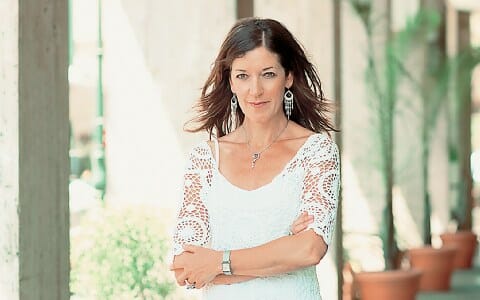
One of the high points of an extended tour of Greece presenting the Greek publication of her novel “The Thread” too place at the Onassis Cultural Foundation, in Athens The moderator for the event was journalist Stavros Theodorakis. Excerpts from the novel were read by Victoria and the actor Nikos Orfanos, with music by Minos Matsas and Eleonora Zouganeli.
This is a speech given by Peter Economides at the Hellenic Management Association (EEDE) on November 11, 2011 entitled “Rebranding Greece.”, excoriating those who would make the country a scapegoat, puncturing lazy stereotypes and insisting that “Greece has richer DNA than any nation on earth. Greece is the heart, the soul, and the spirit of the Mediterranean. Greece needs to own this. Greece needs to express it. Greece needs to inspire and be inspired by this.”
(Be patient… although the introduction, and Peter’s first words are in Greek, the speech itself is in English)
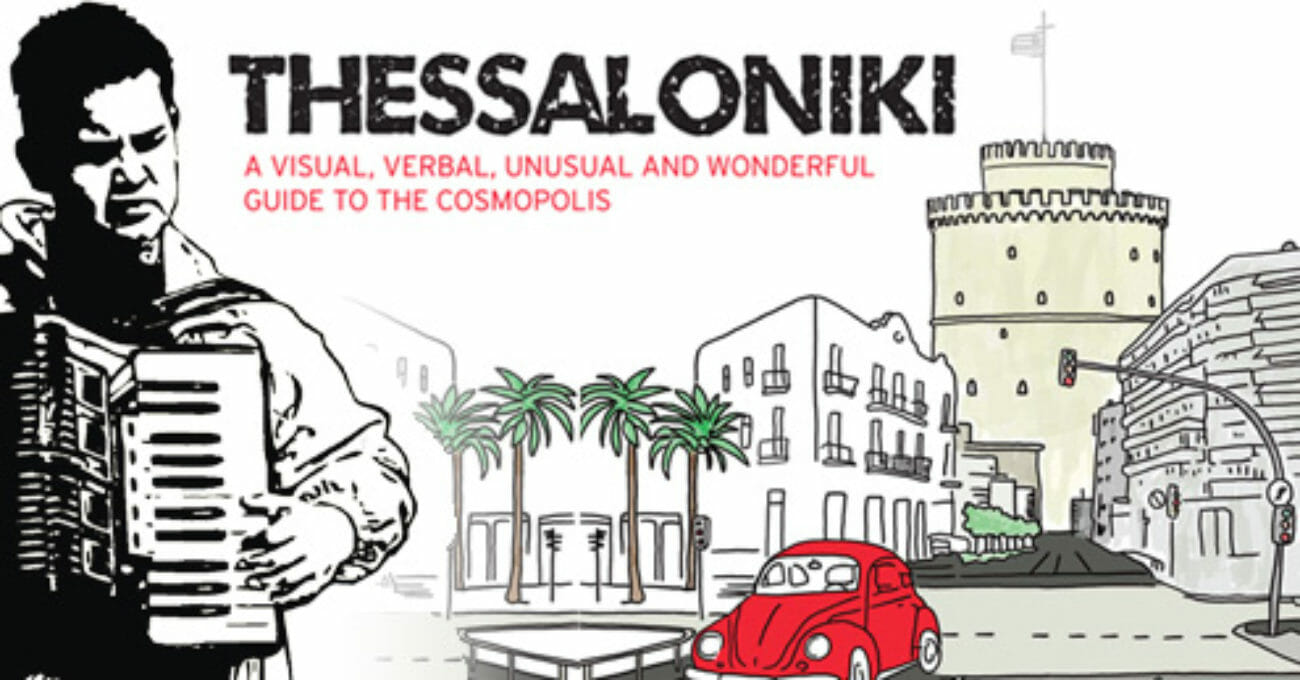
I came across this wonderful guide to the city of Thessaloniki some weeks ago and, having sought the author’s permission, I’m embedding it into the site… It really gives a flavour of the ‘Cosmopolis’, the language, the people and the culture… From How not to be a tourist, to a guide to the Kardashians (and other local tribes)!
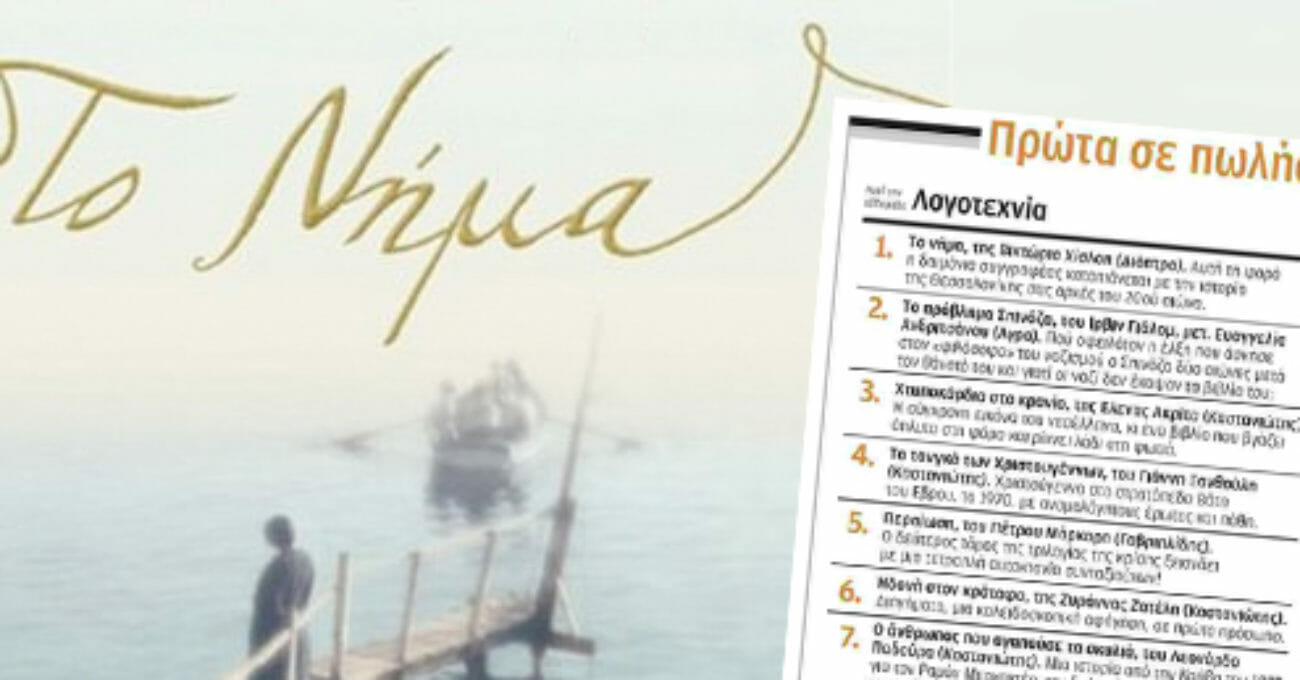
“The Thread” – “To νήμα” in Greek – published by Dioptra Victoria’s ambitious account of 20th century Thessaloniki through the twin tales of Dimitri Komninos and Katerina Sarafoglou, is a number 1 bestseller in Greece. Victoria spent much of December touring towns and cities reading from the book (in Greek) to rapturous receptions, culminating at a launch party at the magnificent Onassis Cultural Centre in Athens. More events are planned early in 2012.
Victoria signing Το νήμα (The Thread) in Thessaloniki
Victoria Hislop’s 2005 novel The Island was translated into more than twenty languages and topped best-seller lists in Greece and the UK. As her eagerly-awaited new book The Thread is published, Mike Sweet talks to the British author
After a career in PR and journalism, Victoria Hislop published her first novel The Island in her mid-forties. A multi-generational saga set against the backdrop of the Spinalonga leprosy colony in Crete, The Island was by any measure, a publishing sensation.
Her new novel The Thread is a romantic saga entwined with the turbulent 20th century history of Thessaloniki, and continues to reflect a love affair with Greece, that is as deep and passionate as that felt by any non-Greek author writing today.
“Yes, the truth is, I think I’m obsessed with Greece,” says Victoria, who I’ve managed to catch before she heads to Athens from London for the Greek launch of The Thread.
Today Greece is Victoria’s second home. She owns a family house on Crete (near Aghios Nikalaos) and speaks Greek fluently. Her three-week tour of Greek cities will promote the new novel and its launch in Thessaloniki will be the most poignant.
The Thread is a tribute to that city and its citizens, and their desperate story that unravelled in the first half of the last century. The new book is Hislop’s most ambitious to date. In both its historical scope and in terms of its small ‘p’ political, as well as romantic narrative, it interweaves the lives of its characters into the backcloth of Greek history over three generations.
The Thread touches on deep and sensitive themes: the effects of the Asia Minor ‘Catastrophe’, anti-Semitism and the Civil War. As in The Island, Hislop partly tells the story through the voice of the family today, travelling through time, connecting the past with the present.
In the first chapters of The Thread the reader is transported to Thessaloniki harbour in May 1923. A teeming mass of Greek refugees from Turkey pours from a ship, newly swapped for Greece’s Muslim population. It is a scene of one of the most painful exchanges of peoples ever conceived. Among them is five-year-old Katerina Sarafoglou. Separated from her mother in their flight from Smyrna, Katerina is adopted by Eugenia, another refugee. When they are allocated a new home, Dimitri Komninos, the son of a rich, authoritarian merchant, is among their neighbours.
The eventual relationship between seamstress Katerina and Dimitri forms the backbone of The Thread. Beside the lovers’ narrative, the tortuous story of Thessaloniki is drawn out through the experience of the two families and their friends – Christian, Jewish, and Muslim. “It is a homage to the city,” says Hislop, who first visited Thessaloniki five years ago when she was invited by the university to talk about The Island.
Reading about the population exchange convinced the author that the subject would be the starting point for a new novel. “I hadn’t realised what a huge impact this exchange had on Greece. I thought if I didn’t know about this, then most who read my books also don’t know.” One of Hislop’s favourite pastimes on her visits to the city was to sit in a Niki street cafe and look across the water to Mount Olympus. It was here that the two main characters in The Thread first appeared to her.
“I’m very aware of the different stature, the different style of older people in Mediterranean countries. They’re always much smaller, always frail but also strong. I was sitting drinking my lovely coffee, and there was a particular elderly couple on the seafront that I watched surreptitiously, if anything, they’re the inspiration for Dimitri and Katerina.”
Given the success of The Island and To Nisi, and the added dimension and scope of The Thread, the new novel promises to elevate Hislop further as an internationally acclaimed author.
Her storytelling, as has been proved by the remarkable To Nisi production, can also be transferred to the screen with huge commercial potential. Hislop was recently approached by a large British film company who wished to make the The Island into a major feature film. But the discerning author isn’t about to agree to just any invitation, however financially appealing.
“I sat there finding myself saying, ‘no I’m not really interested at the moment’,” says Hislop, “because I don’t think at the moment anything can be better than the To Nisi production. I don’t want to rush into something else.”
Hislop describes the reaction in Greece to To Nisi as overwhelming, but she wasn’t surprised by the audience’s response to the series, which had a production budget of four million euro. “I knew from the first day of filming that it was going to be something out of the ordinary. It had the best actors, the director Theodoris Papadoulakis is immensely talented, and it had the most amazing music and costumes. It’s ecstatic reception was deserved.”
Talking about The Thread, Victoria says that although she consciously avoided reflecting on Greece’s current crisis and its repercussions, the story nevertheless has some underlying connections.
“I hope people will read it and think ‘gosh this tiny country has had a very rough time, and very often it’s not the fault of the people’. “There is a link with now, a kind of a continuum of catastrophe that leads right up to the present day.” One thing is clear when talking to Victoria: her passion and empathy for Greece is not something shallow and cosmetic, and far from a commercial convenience.
Horrified to hear that Greek schools’ budgets had been so severely cut, that there was no budget this term for books, Victoria is doing something about it.
“I had emails from teachers in schools, people I’d probably met at signings saying we’ve come back to school and the kids just have a notebook. To me it’s like hearing they’re not eating properly, they’re being mentally starved,” says Victoria. As well as donating her own works, she has now embarked on a campaign to persuade fellow authors who are being published in Greek, and their publishers, to donate quantities of their books directly to the schools.
“I’ve got two other British writers on board so far,” says Victoria, “Giles Milton, who wrote the very successful book on Smyrna Paradise Lost, and Anthony Horowitz, the children’s novelist. They too are very fond of Greece.” “I don’t know where it’s going to go at the moment, it’s just in the early stages. I’d like it to snowball, I really want to do something, and this is an area where maybe I can help.” Plainly, Victoria Hislop’s actions speak as loudly as her words.
British author Victoria Hislop talks about her latest novel, inspired by 20th-century events in Thessaloniki
By Sandy Tsantaki
Greeks are likely most familiar with Victoria Hislop as the writer of “The Island,” an award-winning novel that was adapted for a TV series by Greece’s Mega Channel last year. While reading up on the British author, I was pleased to discover that she seems to know this country well and talks about it during her travels around the world.
The publication of her new book, “The Thread,” translated into Greek and published by Dioptra under the title “To Nima,” provided an opportunity for a conversation with the writer. In her latest novel, Hislop explores the history of 20th-century Thessaloniki, from the Great Fire of 1917 to the present day.
So prior to her arrival in Greece for a book tour with stops including Thessaloniki, Katerini, Larissa, Volos, Lamia, Patras and Athens, the author took some time to respond to a few questions about her most recent offering, as well as the Greek financial crisis and her impressions of the country in general.
How do you think readers of your previous works will respond to your latest novel? Do you believe it will stir up different emotions among your Greek readership to their foreign counterparts?
I think they will be familiar with my style and approach — that I write primarily with my heart rather than my intellect. So perhaps the same emotions will be stirred among readers. There are very sad things in this story — but also very optimistic things too. It is about survival — so that has to be optimistic.
I know that you’re very aware of the current financial crisis in Greece. What would you say is the best way to live with it?
If Britain faced the same situation as Greece, then I think we would all face it together in a united way. Yes, we would protest (we had huge strikes in the 1970s — when we only had very limited electricity — I did my homework by candlelight) but in the end we sometimes simply have to swallow our medicine — it is very bitter but it makes us better in the end. And I think that’s what has to happen here. Whatever the reasons behind this debt — there is only one way. And I hope your new prime minister will have everyone behind him. It seems to me that this is not the moment for “infighting” among politicians. The future will be better — it always is.
What made you decide to return to Greece again for your new novel?
I became fascinated by the story of the Population Exchange — and also the story of the Jews here. The fact that within only two decades, from 1923 to 1943, Thessaloniki was transformed from being a city with three equal sections of population (Christians, Muslims and Jews) to being only Christians was a very compelling one. And this seemed only the beginning of the story — the hardships that followed also drew me in and before long I had realized that there is a connection that links the events of those times with the situation of the present day.
How closely does the fiction of “The Thread” resemble actual reality?Is it based on real people and their true stories?
There are no true stories in “To Nima.” I research extensively with books (written mostly by British historians, and some translated from the Greek) and then imagined what it would have been like to live through them. So I did not interview elderly people — for me this is slightly dangerous, as a novel then becomes a work of nonfiction, and that is not my craft. Perhaps stories just as I fantasize did happen in real life — but there are no specific “life histories” to be found in the novel.
Do you think you could write a book with a happy theme?
I think in some ways, this book does have a happy theme — in that it is all about survival. Yes, there is plenty of loss, but not only that. It is about the strength and generosity of the human spirit. Just to write a story about people being happy… sounds a bit dull to me. There has to be conflict and resolution to make a good story.
Are there comparisons to be drawn between what was happening back then in Greece and how things are now?
The true events happening in the background of “To Nima” (from 1917 until 1978) were very tough and very hard to survive. And yes, there is certainly a comparison to be made — and definitely a link between what happened then and how things are now.
Do you find any similarities between Thessaloniki and Athens or any other city?
I think Salonica is fairly unique — though I haven’t visited every single Greek city yet (though it is on my agenda). But no other city ever had the title “Madre de Israel” (Mother of Israel) — or the “Jerusalem of the Balkans.” So Salonica definitely is unique in having been the home of the vast majority of Greece’s Jewish population. Geographically, Salonica is unique, with its position on the sea and all the layers of history that seem still to exist and to be visible there.
Is there one question that you wish to respond to but haven’t had a chance to yet?
Why the book is called “To Nima.” I love the Greek myth of the Moirae [the goddesses of fate who personified the inescapable destiny of man] — that the length of the “thread” of your life is predetermined, and this seemed to go well with the idea that all historical events are linked, or I could say “threaded,” together. As we would say in English, “One thing leads to another,” and I see this very clearly with the history of Greece in the 20th century — everything happening now somehow has its roots in the past. And writing this story has certainly helped my British readers see how much Greece has been through — and I hope this will make them more sympathetic too. And of course — all my female characters sew and weave in this story — so it is not just a metaphorical title! They do these activities in order to survive in a period of great hardship — and indeed to be creative too.
You successfully mix politics and history. If you were to choose politics as a profession, where would you like to be and why?
I am not sure I would survive as a politician, because I believe greatly in compromise — and I think politicians are usually very definite and very focused — and they often don’t really seem to listen to each other. I am very much a listener. Actually I think I might be a reasonable diplomat. Maybe an ambassador — that would be a marvelous career I think. And every five years I would move to a new country and learn a new language — and try to get countries to understand each other better.
You have compared your latest book to “an oriental rug.” What kind of descriptions of your work make you happy and which drive you mad?
Best criticism of my work: to put the spotlight on forgotten stories and to make readers hear forgotten “voices.” Criticism to drive me mad: in the UK I am often described as “light reading” — I suppose it‘s not such bad criticism — but I do think it trivializes.
We use cookies on our website to give you the most relevant experience by remembering your preferences and repeat visits. By clicking “Accept All”, you consent to the use of ALL the cookies. However, you may visit "Cookie Settings" to provide a controlled consent.
This website uses cookies to improve your experience while you navigate through the website. Out of these, the cookies that are categorized as necessary are stored on your browser as they are essential for the working of basic functionalities of the website. We also use third-party cookies that help us analyze and understand how you use this website. These cookies will be stored in your browser only with your consent. You also have the option to opt-out of these cookies. But opting out of some of these cookies may affect your browsing experience.
Strictly necessary cookies are absolutely essential for the website to function properly. These cookies ensure basic functionalities and security features of the website, anonymously.
Cookie
Duration
Description
__cf_bm
30 minutes
This cookie is set by CloudFlare. The cookie is used to support Cloudflare Bot Management.
__cfduid
1 month
The cookie is used by cdn services like CloudFlare to identify individual clients behind a shared IP address and apply security settings on a per-client basis. It does not correspond to any user ID in the web application and does not store any personally identifiable information.
_icl_visitor_lang_js
1 day
This cookie is stored by WPML WordPress plugin. The purpose of the cookie is to store the redirected language.
bp-activity-oldestpage
session
This cookie is set by the provider Buddy Press activity. This cookie is used for storing the information when navigating through the pages. It helps to provide a "load more button".
cookielawinfo-checkbox-analytics
11 months
This cookie is set by GDPR Cookie Consent plugin. The cookie is used to store the user consent for the cookies in the category "Analytics".
cookielawinfo-checkbox-functional
11 months
The cookie is set by GDPR cookie consent to record the user consent for the cookies in the category "Functional".
cookielawinfo-checkbox-necessary
11 months
This cookie is set by GDPR Cookie Consent plugin. The cookies is used to store the user consent for the cookies in the category "Necessary".
cookielawinfo-checkbox-others
11 months
This cookie is set by GDPR Cookie Consent plugin. The cookie is used to store the user consent for the cookies in the category "Other.
cookielawinfo-checkbox-performance
11 months
This cookie is set by GDPR Cookie Consent plugin. The cookie is used to store the user consent for the cookies in the category "Performance".
lang
This cookie is used to store the language preferences of a user to serve up content in that stored language the next time user visit the website.
PHPSESSID
session
This cookie is native to PHP applications. The cookie is used to store and identify a users' unique session ID for the purpose of managing user session on the website. The cookie is a session cookies and is deleted when all the browser windows are closed.
viewed_cookie_policy
11 months
The cookie is set by the GDPR Cookie Consent plugin and is used to store whether or not user has consented to the use of cookies. It does not store any personal data.
wpml_browser_redirect_test
session
This cookie is set by WPML WordPress plugin and is used to test if cookies are enabled on the browser.
Analytics cookies are used to understand how visitors interact with the website. These cookies help provide information on metrics the number of visitors, bounce rate, traffic source, etc.
Cookie
Duration
Description
__qca
12 months
This is an analytics cookie set by Quantcast Measure. You can opt-out of all measurement by Quantcast via their site.
_ga
2 years
This cookie is installed by Google Analytics. The cookie is used to calculate visitor, session, campaign data and keep track of site usage for the site's analytics report. The cookies store information anonymously and assign a randomly generated number to identify unique visitors.
_gat
1 minute
This cookies is installed by Google Universal Analytics to throttle the request rate to limit the colllection of data on high traffic sites.
_gid
1 day
This cookie is installed by Google Analytics. The cookie is used to store information of how visitors use a website and helps in creating an analytics report of how the website is doing. The data collected including the number visitors, the source where they have come from, and the pages visted in an anonymous form.
Marketing and advertising cookies are used to provide visitors with relevant ads and marketing campaigns. These cookies track visitors across websites and collect information to provide customized ads.